
The modding community keeping Spore alive
We talk to three members of the Spore modding community about their efforts to continue Maxis' work and keep the game active for new generations of fans.

After publishing my Spore oral history in June, a member of the community who goes by Biolaser reached out by email. "Almost everyone in the Spore community recognizes that Spore did not live up to the hype surrounding the game in the 2000s," they wrote. "From the quotes in your work, the [Electronic Arts] developers seem to share this view all the way up to [chief designer] Will Wright himself."
In my story, Wright said that "the biggest criticism of Spore, which I totally accept, is that it felt like five separate games that were kind of stuck together. Which it pretty much was." Chris Hecker, designer and lead engineer for the procedural generation, said that although Spore "had more magic in it than most games," it was "overall a failed game design."
But Biolaser wanted to share a different perspective. "The greater Spore community is still extremely active, and content for the game is being produced all the time," they wrote.
 Jay Castello

For members of that community, Spore remains a beloved game despite having been released in 2008 to a mixed reception. EA also continues to maintain public servers, and in 2024 it created a new official Discord server. According to the Spore-O-Meter, a log created by a community member called Kade which pulls from Spore's API, dozens of new players create accounts and hundreds of new creatures are still uploaded daily.
"I would also argue that modding is the single strongest factor that has kept Spore alive with an active playerbase," Biolaser wrote. To dig in further, I spoke to three members of the modding community — Biolaser; Kade, who runs the tool hosting website Sporecommunity.com; and long-term modder Valla — about the 18 years since Spore's release, and the work and passion they've put into keeping it alive.
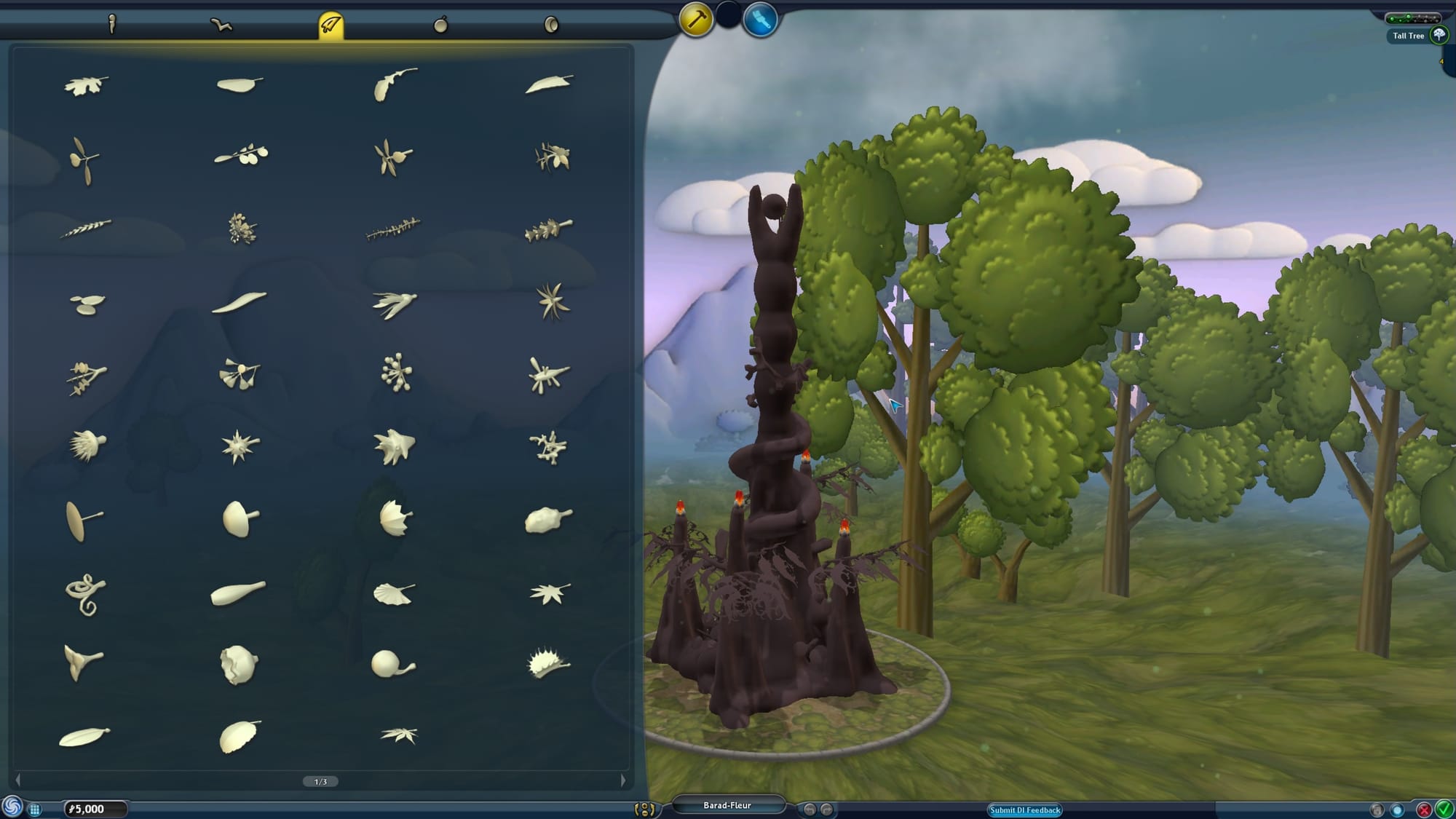

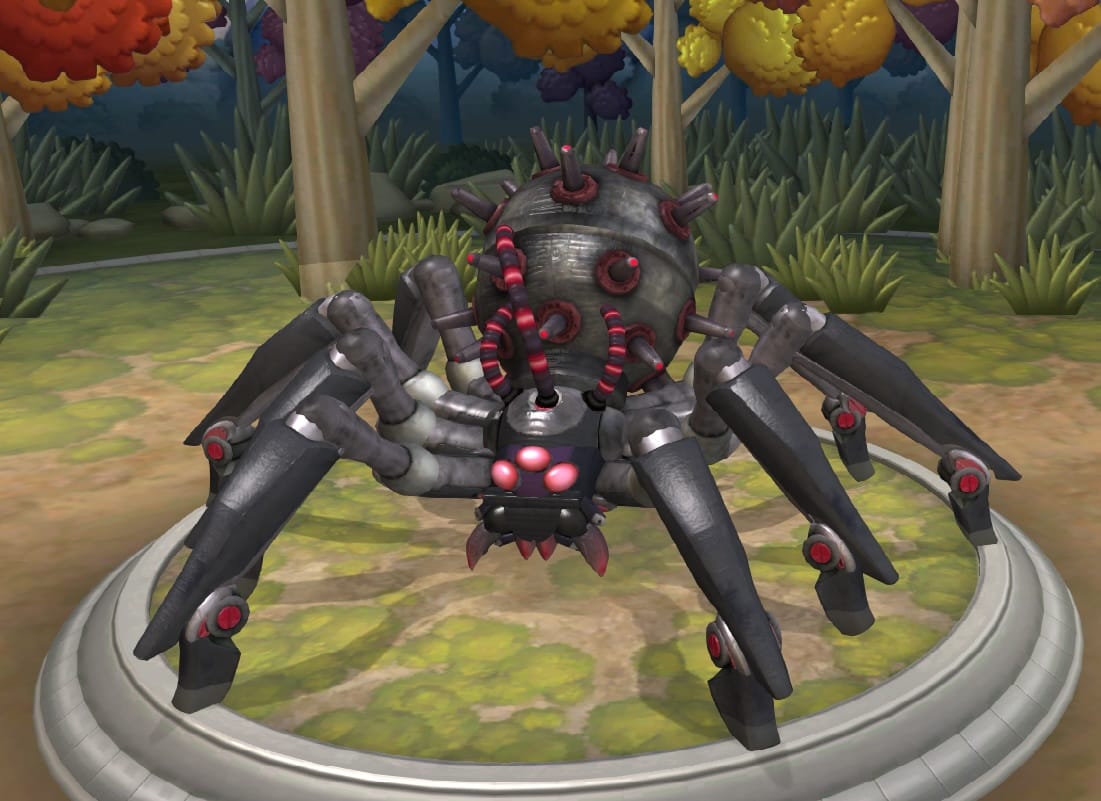
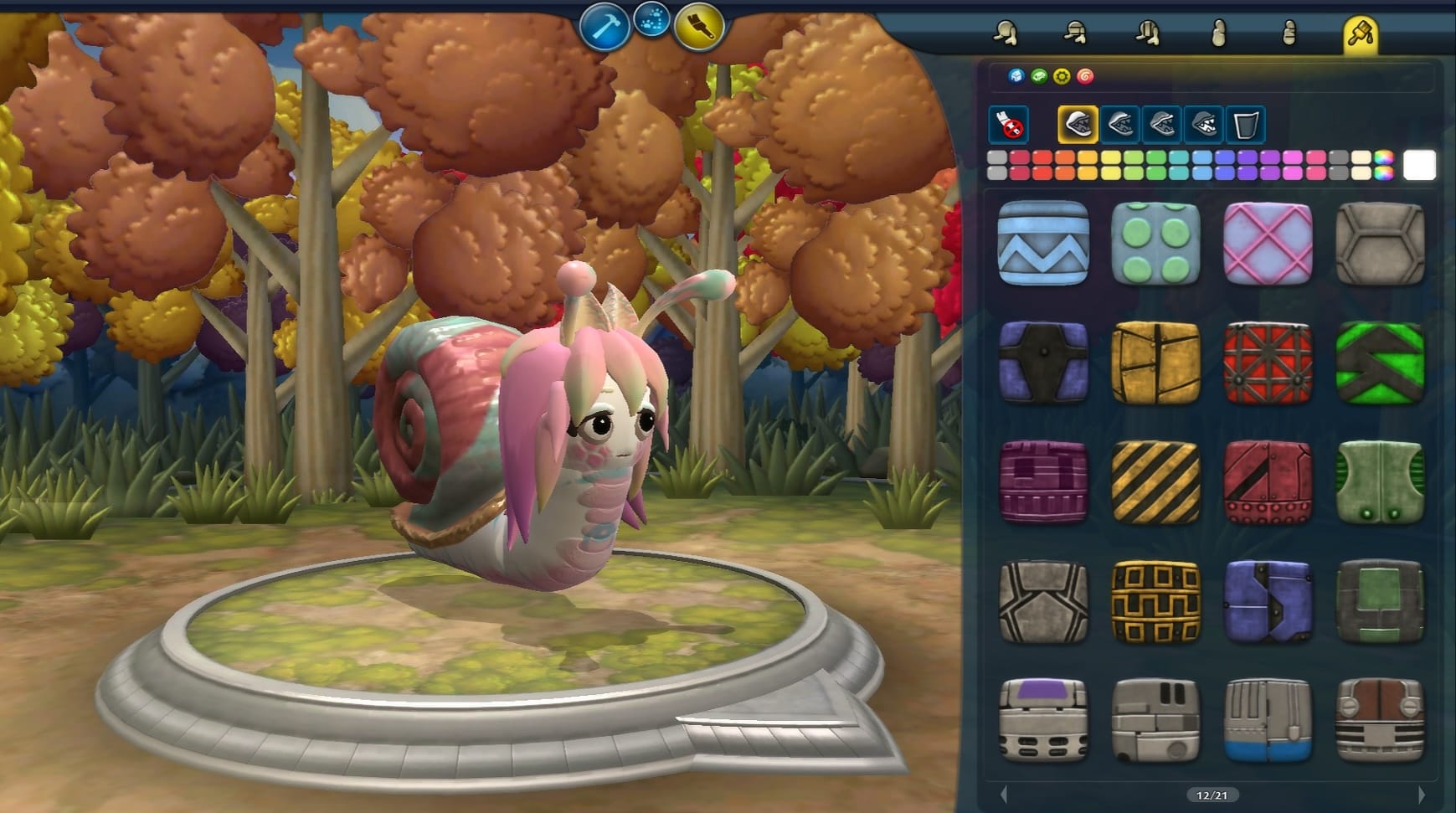
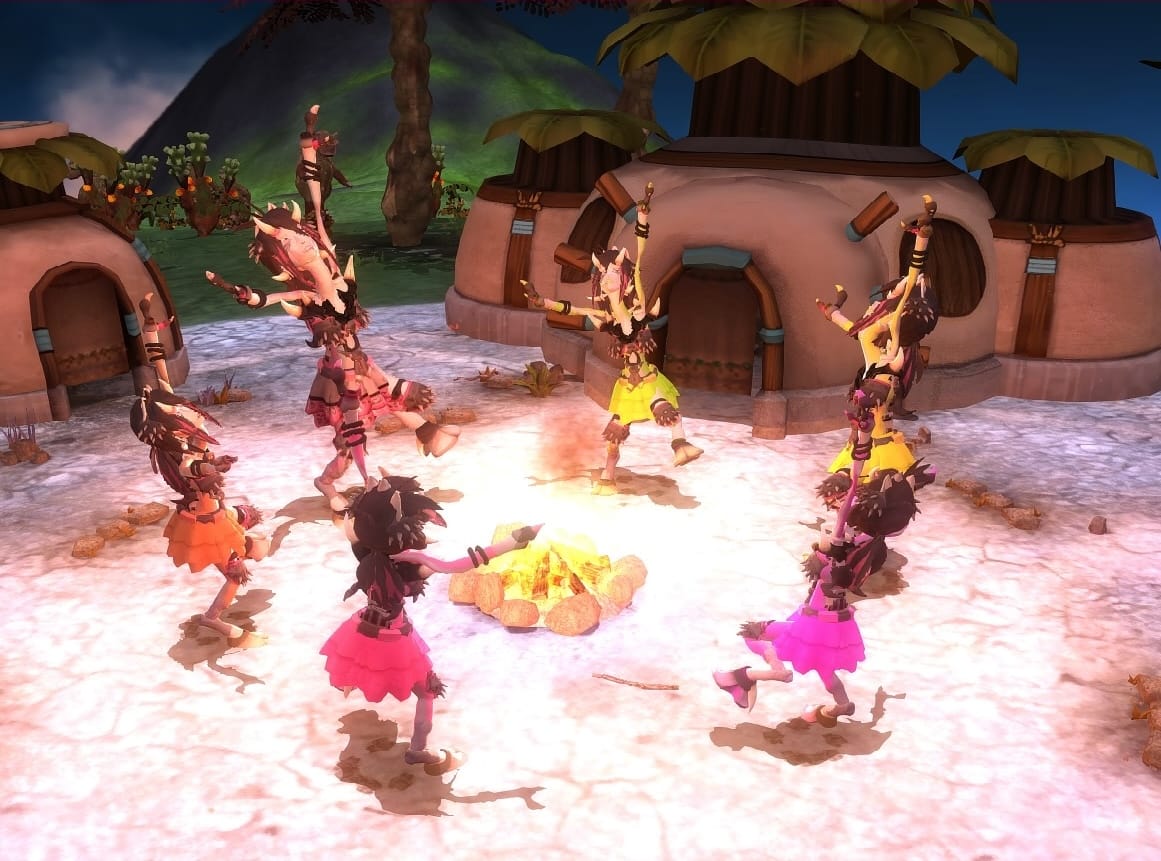
Two of the most popular Spore mods, Flora Editor Reconstruction and Advanced Creature Paint, give players more customization options. | Images: Biolaser
Early community
Shortly after Spore was released in September 2008, modders set to work. Despite not having official support, the first mods came out within weeks of the game's launch.
Biolaser: Spore wasn't necessarily designed to be a game that had a huge modding community, or [even] to be modded in the first place. EA has always been very supportive of community-driven modding in their games; it's not that they don't want people to mod, it's that they're not as attuned to official modding support as [some] other communities. So when Spore was launched there were no proprietary modding tools. That differs heavily from the expectations people held in that gaming era. Another really big [release] of that time was [The Elder Scrolls IV: Oblivion]. And Oblivion shipped with proprietary modding tools. People were able to use those tools to make levels, to make full mods, and modding communities quickly developed. [...] The one advantage we did have [on Spore] was that [...] we had people from the Sims community — Sim City, Sims 2 — who had experience with .package files.
Biolaser: At the time, the community was extremely disjointed. [...] Spore had an official forum called the Sporum [...] but it wasn't the Sporum where mods were mainly being discussed. There were two places: the Sporedum, which is different from the Sporum, and SporeBase. You can go back and see threads all the way back to 2009, people complaining about what they didn't like about Spore, talking about what they wanted in the game, and people talking about the realistic plans that they had for modding at the time.
SporeMaster
The first major tool for making Spore mods released just a few months after the game itself, though mods of this era were primarily limited to tweaks to gameplay and the creature editor.
Biolaser: SporeMaster was [a tool] made by a very popular modder named Void, [and released] December 1, 2008. [...] The ability of a tool like SporeMaster is to take Spore's kind of strange, janky file system, make modifications to it, then pack the file into the .package format so [it] can be put in the data folder and can impact the game. We had that ability very early, but again, it was very disjointed. It's very hard to credit all of the modders of that era [...] but we had a tool and that was the most important part.
Valla: [That era] was mostly just modifying property files. Property files define stuff like what parts are in the editors [and] what stats they contain, the level of complexity of creations, the budget you can have in the editors, certain statistics of the game, how much food per fruit or meat carcass or whatever. [...] SporeMaster was also able to unpack and repack .png and .dds textures, so back then it was mostly recolors, value tweaks, and a couple of people who managed to get the parts modding working, which was at the time very difficult.
Biolaser: A lot of early [mods] were very silly. They were things like, We can make your head gigantic in the creature editor, or something like that. But a lot of [them] were also corrections on things that people thought should have been in the game already. For example, the Grox are probably the face of Spore in a lot of ways. They're the antagonistic cyborg species that you reach at the end of the game [and] sometimes Grox spaceships come down, to the annoyance of a lot of people, and abduct your tribe members or creatures in the earlier stages. [...] The Grox have these really cool, scary looking cybernetic parts [and] some of the very first mods added those to the creature editor. [...] I remember personally that's something that I jumped on right away.
[In these early days, even Maxis released a mod to fix a bug ahead of an official patch.]
Biolaser: There was a major bug in Spore at the time where [...] you could not reach all of the Grox's systems because of how restrictive it was around the galactic core, meaning you couldn't completely destroy the Grox empire [...] which meant you couldn't earn one of the rarest badges in the game.
[The fix was first released in January 2009 as a mod, a .package file that players had to manually place in their data folders, and later as part of patch 1.04 in June 2009.]
DavoOnline and Dark Injection
A little over a year after Spore was released, a modder going by the name Davo was instrumental in bringing the community into a more organized place.
Biolaser: DavoOnline was created in December of 2009. [It] was probably the first major hub of Spore modding that everyone flocked to.
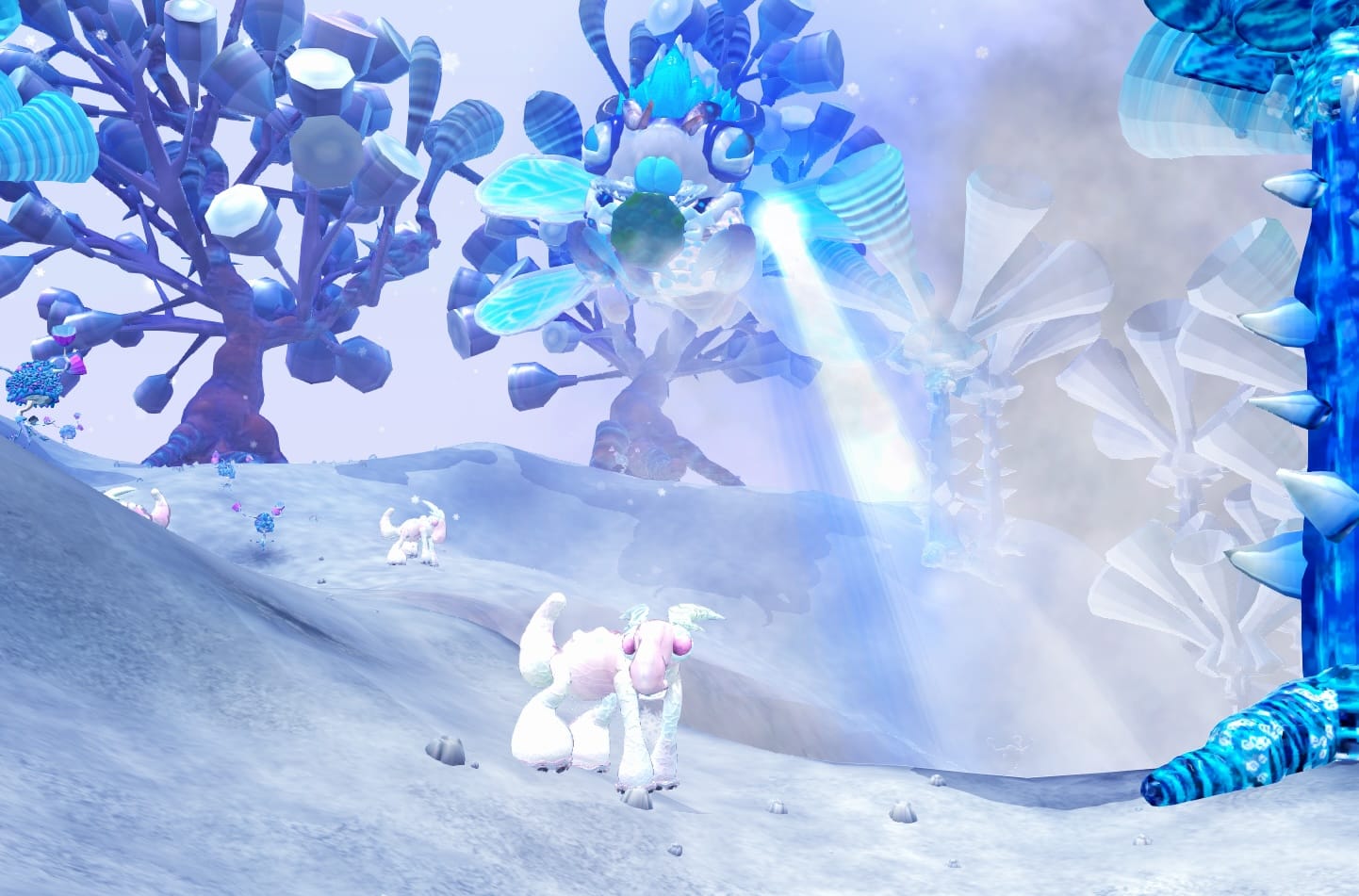
Valla: [Davo] was doing some really interesting mods [...] that didn't really add a ton to gameplay, but were so visually interesting to see at a time when really all people were doing was doing stuff like tweaking the damage in space stage or adding a couple new models. He was doing stuff like changing the terrain of planets in creature stage to be really exaggerated or allowing you to pick up creatures in the creature stage.
[In 2011, Maxis released a MOBA based on Spore called Darkspore. In response, Davo released a mod called Dark Injection, which added parts from Darkspore back to the base game, along with other changes such as an updated UI.]
Biolaser: It was, at the time, the most ambitious Spore modding project, and everyone seems to agree that at that time lots of tools for Spore modding were made specifically for Dark Injection. That led everyone to DavoOnline as the main forum and modding hub for Spore modding and for anything related to Spore [...] That kind of helped organize the Spore modding community around one central area.
Valla: [Dark Injection] had a lot of problems at first but that's when the community stepped in to help. Davo left the community [for a while] for real-life endeavors [...] and so it was kind of a community effort to turn just this importing of all the models, completely textureless, into being properly textured, properly animated, able to be saved, sorted out nicely into rows as the default creature parts are. And that became one of the must-use Spore mods.
Discord and the Spore Mod API
Following Dark Injection, the community continued to welcome new members, release new mods, and enjoy Spore for almost a decade before the next major shift — the founding of the Spore modding Discord server in 2017.
Biolaser: What started as a tiny little group chat turned into hundreds of people joining.
[At the same time, a new tool was being developed that would massively increase what Spore mods could do.]
Biolaser: A Spanish modder named EMD was working with Davo, [as well as modders known as] Splitwirez, Noid [and more]. And he had this idea for a much more complex system of Spore modding [...] the Spore Mod API [Software Development Kit].
Kade: We can't see Spore's code because you can't just access the code of a program like that. But what [the API] does let us do is, if we know the area in the program where the code we want to modify is, we can actually override it and put our own code in.
Biolaser: This was the absolute biggest technological advance in Spore modding. [...] We could now use custom code. And that really took Spore modding from something that was very restricted based on the .package files to something that was more or less limitless.
Kade: EMD was able to research how the paint system works in the game and by doing that he was able to create a system where you can custom paint on creatures. Normally the game only lets you choose three colors for a creature and then it'll automatically paint based on those three colors, but we had a model that actually interacts with the paint system and then lets people paint their creatures however they want. That was one of the cool ones that came out of [the API].
[Spore's original paint system, developed largely by design and lead engineer of procedural generation Chris Hecker using lead engineer Andrew Willmott's Swarm particle system, was part of what lead designer Will Wright declared the game's "black magic" — its ability to adapt in real time to the player's choices and react procedurally. Hecker said in our oral history that in most games, design is done "ahead of time by a professional in a[n external] tool." And some modders and players wanted that level of control back.]
Biolaser: SporeModderFX was [another] tool made to work with the SDK [which] allowed us to do lots of things like custom modeling. It had Blender implementation [...] and you could take the code mods that you made with the SDK and you could directly link them with .package [files] that also added functionality to your game. So that was the biggest sea change in how we did modding.
Valla: I [had left] the community around 2015 to pursue other interests. [...] I actually kind of got pulled back in because of an anime I watched that I was like, Wow, that's oddly Spore. It was Keep Your Hands off Eizouken! and it had these characters designing these very strange otherworldly vehicles and buildings and creatures. And I was like, Oh my God, that game from when I was a kid that I used to like to mod. I wonder how that's going now. And so I returned and took a look around and the stuff I saw was just insane. It was stuff that would never have been possible before [the API]. [...] I was sucked back in through the promise of all these new things that we could do and all these new people who were seemingly experts at that specific new style of modding.
Reverse engineering
Most Spore mods rely on "detouring", which allows a modder to redirect Spore's functions to run their own custom code. But this requires modders to know where specific functions are located within the original code base, which has required a lot of complex reverse engineering.
Biolaser: [Spore] shares an engine with SimCity. [...] By cracking open SimCity, we could glean a lot of information about how Spore's engine worked and reverse engineer a lot of functions like that.
[But in 2019, a new tool arrived from an unlikely source.]
Biolaser: When the U.S. National Security Agency released Ghidra, that was huge. I know it sounds so funny that the NSA contributed a lot to Spore modding. Ghidra was a free open source reverse engineering software for static analysis of malware. But because it's free and open source, it actually became like the go to software that we use to reverse engineer Spore.
[And in January 2026, a prototype build of Spore leaked. The debug symbols and program database file found within made it much easier to locate "things like classes, function labels, variables, and data fields," says Biolaser.]
Valla: We're still going through that and pulling names and functions and variables, trying to expand the API. It's still very much incomplete, even as powerful as it is. So what is [possible] with Spore modding is still increasing, even on a weekly or daily basis.
Biolaser: It's complex, though. Reverse engineering is long and tiring and requires lots of very specific skills. And I think that's the major barrier for people getting into Spore modding.
Open source?
A solution to the onerous nature of reverse engineering would be for EA to make parts of the Spore code open source. And there is precedent for this kind of move. In 2020, EA released part of the source code for the classic Command & Conquer games, following up with more in 2025. It even commissioned a modder, Luke "CCHyper" Feenan, to restore the code for release.
Biolaser: With Command & Conquer, [EA] released enough of the source code that it removed the barrier for entry of reverse engineering. People could crack open the game and see how it worked inside. They could see how functions worked, they could see how the code base worked, but they still had to purchase the game in order to play the game. So that model I think is extremely admirable. It's EA contributing to the future of modding, contributing to how games are preserved.
[The Spore community has a good relationship with EA's community team that works on the game, says Biolaser, and have floated the idea to it.]
Biolaser: You are fully allowed to discuss modding in the Spore official [Discord] server [and] if you ask about problems with your modded game, they actually send you directly to the Spore modding community [Discord server]. It's linked in the Spore official server and we provide support for modded copies of Spore. So in a way that relationship already exists.
Kade: We have a direct line of contact with the current team that maintains the servers [but] we know it's not the high up executives at EA that we're dealing with.
Biolaser: The way I think we can take that relationship further is: Right now the developers, the formal Spore team at EA that runs the Spore official [Discord] server, has said they have the source code for the game [...] but they don't have the build machines. So they don't have the ability to take that code and to make their own official .package files that they could use to release actual content for Spore. So right now the modding community is the only group that is creating new content for the game that's keeping the game fresh. So if we were to have something like a limited source code release and modding guidelines released by EA [...] that would be huge for us because that would allow us to make content for Spore long into the future. It would remove the barrier of reverse engineering and it would allow us to continue to keep people interested in this game.
Kade: EA still gets to sell the game. It's basically free advertising for them. When you have the community that's promoting your game for you, it doesn't cost EA anything. And then of course it's beneficial to the community because we have more tools to create mods [...] and it sets clear expectations of what we can safely do without running into any issues.
Future dreams
There are specific things the community dreams of doing if the tools allow them to — often inspired by the feeling of the base game missing something that was suggested in the marketing.
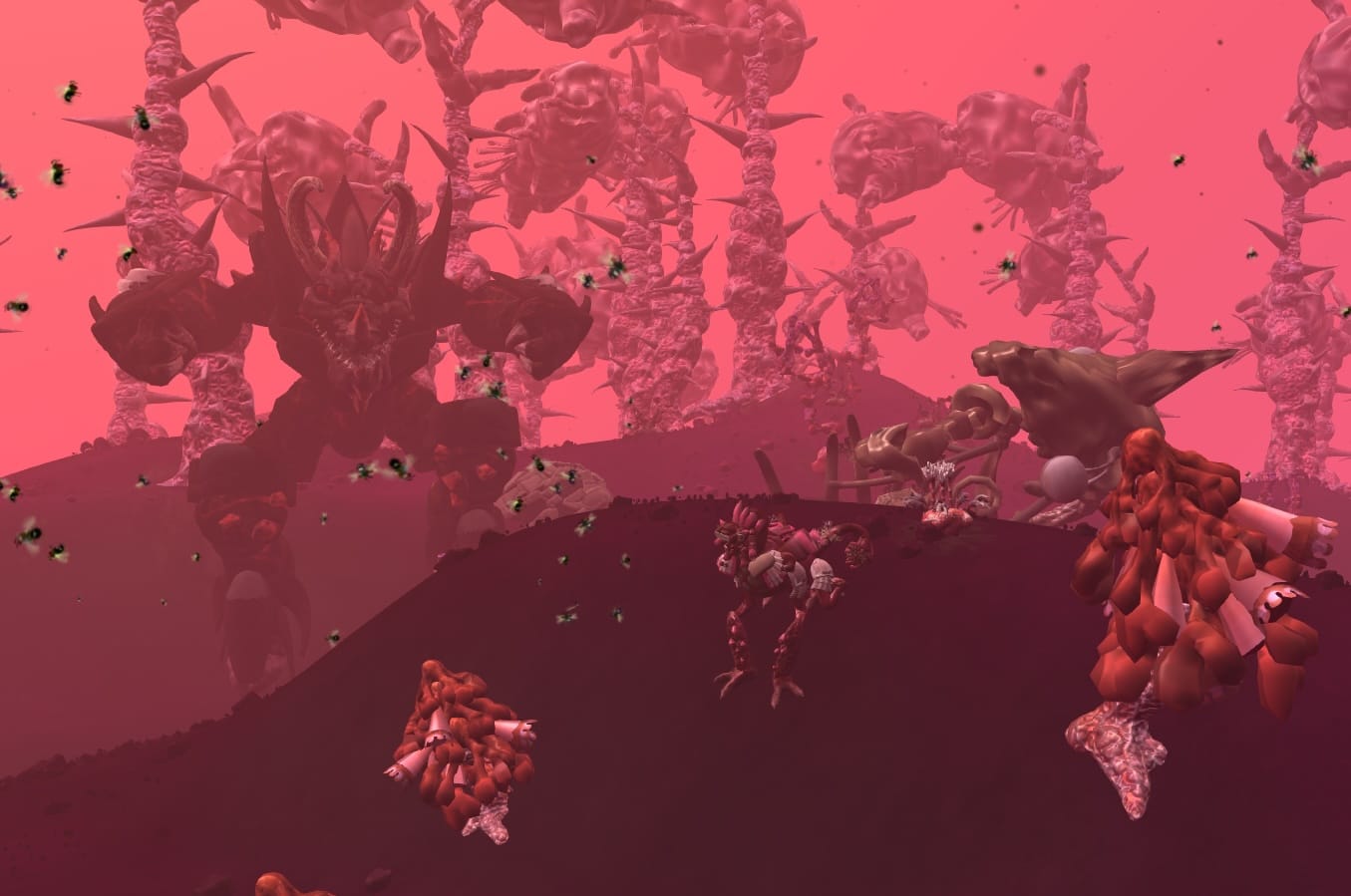
Valla: Even still to this day one of the most sought-after mods is something that will likely never happen, which is the aquatic stage. Everyone wants the aquatic stage. No one wants to be the person to make it. Because it would be like making an entirely separate game inside the game and we just don't have that level of specificity with the segments of code that we currently have available.
[The 2005 GDC demo given by Will Wright showed a stage between the cell and the land-based creature stage where the creature was, in Wright's words, "living under the ocean."]
Valla: Looking at something that was either shown in one of the old presentations or even something out of like an old trailer that just didn't quite make it into the game in its same form [is] kind of the thing that inspired everyone to want to turn this game into such a hub of modding despite its difficulty.
Community legacy
Above all, the three people I interviewed return to the reason Biolaser reached out in the first place: to emphasise that Spore is still a living game and that, despite its difficulties, it is loved.
Biolaser: I don't think [the Maxis developers] realize how much the game really has stuck with people all these years. It's not a game that went away quietly into the night and no one ever talks about it again.
Valla: I've modded a lot of Source engine games. I've modded stuff like Stardew Valley and [...] some other random assorted games like Life is Strange and stuff like that. But the Spore modding community for me is a truly unique thing, because the game is its own genre. There is only one game of its sort that is available to be modded and fully available to be played. And because that has never been expanded on by the official company, it makes it all the more important for people to keep this game alive.
Kade: One thing that's always stood out about this community to me is that it's something worth preserving. We're in an era where a lot of content is very short lived. A lot of things are algorithms and you don't really get to see the full range of what people are creating all the time. So I think Spore is pretty unique in that sense. [...] It really shows off how broad and diverse the community is.
Valla: What makes it feel so different is just the level of creativity that even the non modders have. Even [to help] the people who are just using this stuff, it makes it totally worth it to mod the game. It makes it worth it to add new parts to see what people are going to do. Because people will take custom parts that I've made and they will use them in ways that are utterly fascinating to me. It feels like being part of other people's creativity in this awesome way, and I just have never gotten the same sense of that with any other modding communities. [...] You don't need to be an expert to install a mod that will totally change how you interact with the creative side of things. And I think that is my favorite part of modding; putting something out there and seeing someone integrate that into their own story.