
After almost a decade, Rez Infinite remains gaming's greatest tease
"If we're using the word 'prologue,' obviously something has to come after..."
When Enhance announced its reimagined puzzle game Tetris Effect in 2018, I remember feeling four emotions in quick succession.
Excitement, given the team's track record of working on some of the game industry's best music games. Surprise, since the reveal trailer — a brilliant recitation of a Harvard Medical School study — didn't initially show its hand. Curiosity, for how the song in that trailer managed to successfully pull off a "connected" pun.
And lingering in the back of all that: confusion.
Wasn't this supposed to be Rez?
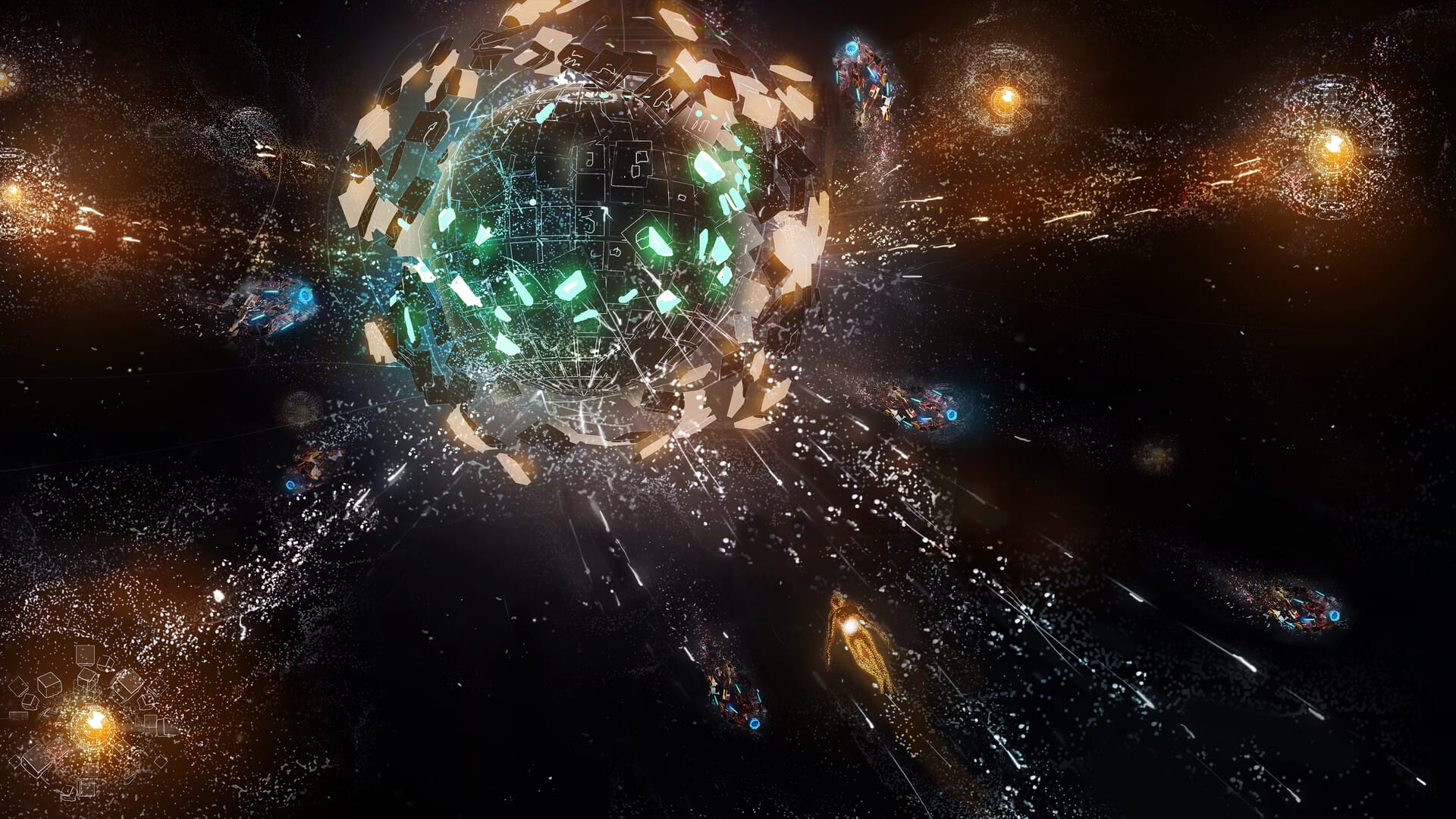
Almost two years earlier, Enhance had released Rez Infinite — an updated version of the 2001 rhythmic shooter that Enhance founder Tetsuya Mizuguchi had produced at Sega. The package included virtual reality support and a new stage called Area X, which transformed Rez's vectors into an ocean of particles and let players fly wherever they wanted. Many who tried it called it the best thing they'd played in VR, with the team's penchant for fusing visuals and music slotting perfectly into the experiential nature of the new headsets. But it only lasted about 20 minutes.
Like many VR experiments at the time, Area X felt like a prototype for something bigger. And Mizuguchi said as much, referring to the stage as a "prologue" for a future project.
Tetris Effect wasn't that project, yet it was hard to complain, seeing how well it nailed the idea of a light show puzzle game. It won game of the year awards from Eurogamer and Giant Bomb, and ranked #4 on Polygon's list. It felt like a worthy detour, after which, I figured, Enhance would get back to Rez, or maybe a spiritual successor of some sort.
Then came Humanity, another great puzzle game that had even less of a connection to Rez. Then, in June of this year, Enhance announced the excellent-looking Lumines Arise, the latest in the long-running puzzle series. All along, Mizuguchi has been popping up in interviews, hinting at an Area X follow-up. And each time Enhance has announced a new game, it's been something else.
It's now been more than nine years since Rez Infinite released. So when I sat down with Mizuguchi, Rez Infinite art director Takashi Ishihara, and Enhance senior vice president of production and business development Mark MacDonald recently to look back at Rez Infinite, I had one question I couldn't stop thinking about: At what point should I stop expecting this to happen?
But first, how this all started
Back in the early 2010s, Mizuguchi wasn't just concerned about making a new Rez; he was worried about losing the original. He'd spent the better part of a decade at a studio he co-founded, Q Entertainment, and after finishing work on the Kinect shooter Child of Eden — itself a Rez spiritual successor of sorts — he stepped away, citing the stresses of the company being pulled in different directions.
He spent time teaching and dabbling in mobile games, but as he describes it, the idea of bringing back Rez kept nagging at him. He formed Enhance in October 2014.
Tetsuya Mizuguchi (creative director): After I left Q Entertainment, I was kind of on hiatus. But I was always thinking about Rez. That was a game that I personally poured so much energy and so much soul into. And so when I thought about, Where is the game industry going to go, I knew technology was moving very fast and I could already see that newer hardware and consoles were going to come out, and the life-cycles of some of these older games were probably going to come to an end. I knew we were going to start seeing games disappear from people's shelves, and there was an expiration date, basically, written on some of these older games.
I didn't want that to be the end of Rez's story, and I was just really thinking, How can we give this life and have this live on as long as possible, or forever? And when I thought about why I was so into this subject in particular, I realized it's because I feel like the origin of where I'm at today — a lot of it comes from the time spent on the exploration and experimenting that we did back then when we created Rez. So I didn't want the fire to go out.
Right around that time, Mark [MacDonald], who was still at [localization and publishing company] 8-4 — I met Mark and had a conversation about basically, "What can we do about this? How can we make it so that this doesn't disappear from the world?" And eventually, the conversation kind of went in the direction of, "How can we turn this into an actual project that we can work on together?"
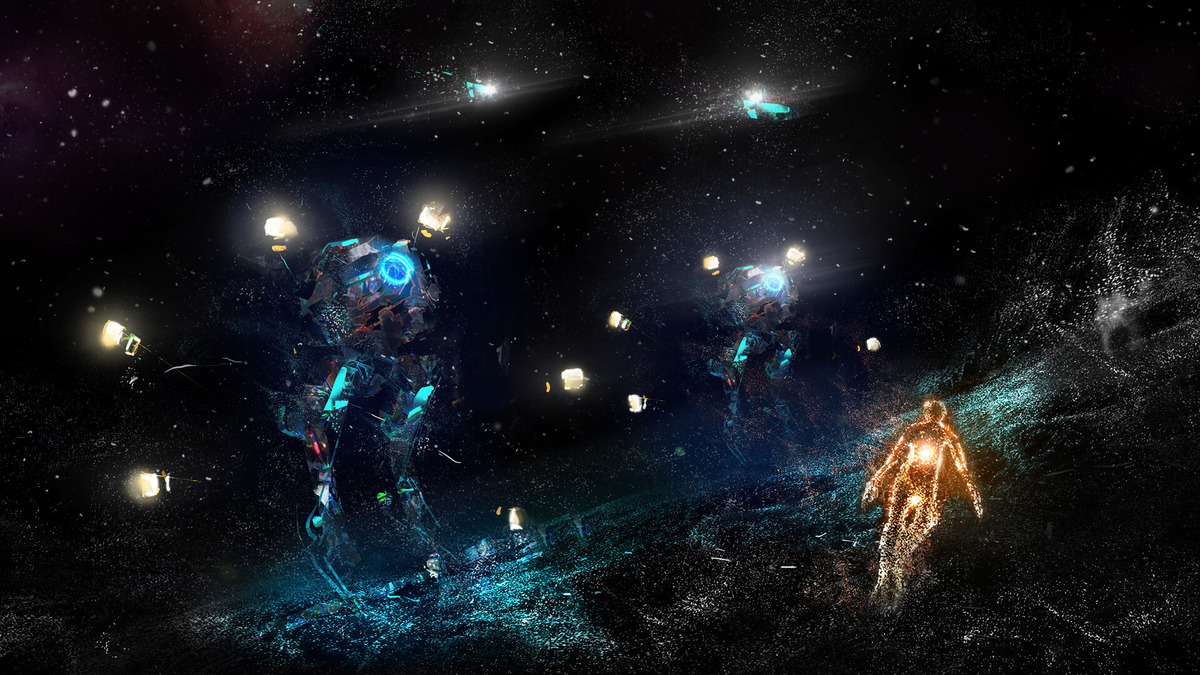
And then, similarly, [Takashi] Ishihara-kun, who had at that time already left Q Entertainment as well, and was working at a different game studio — we were constantly in touch and having side chats and whatnot. We kept talking about, "Maybe there's a chance we can work on Rez, and if we do, hopefully it's not just a project where we basically up-rez it and update it and put it out on platforms. What would we add to it? How would we extend the experience of the original Rez?" And sometimes we would get together in late evening hours, up until midnight, and Ishihara-kun would share some concept art based on the conversations we were having. Eventually, that turned into Area X.
So this is maybe part of 2013 going into 2014, and throughout these many threads of conversations, I was happy with these two individuals and some people around us. These small steps really started to turn into a single project and idea, and I was starting to feel a clearer focus that maybe this was something that we could really do. The market was starting to talk about VR, manufacturers were coming out with prototypes and whatnot, and we were starting to hear more about the near future of what these VR devices were going to be like. And so that also helped sharpen my focus on, OK, I think we have an idea.
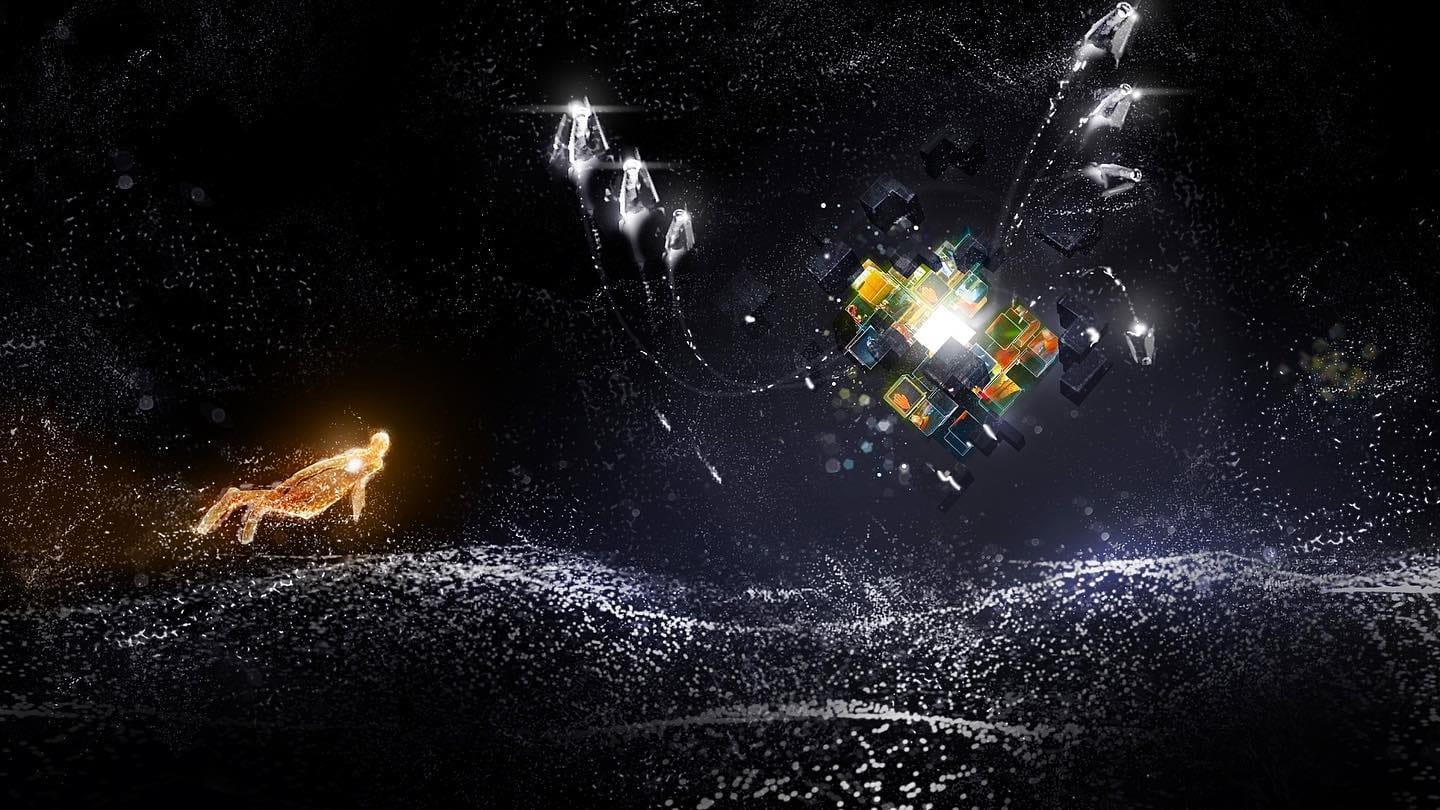
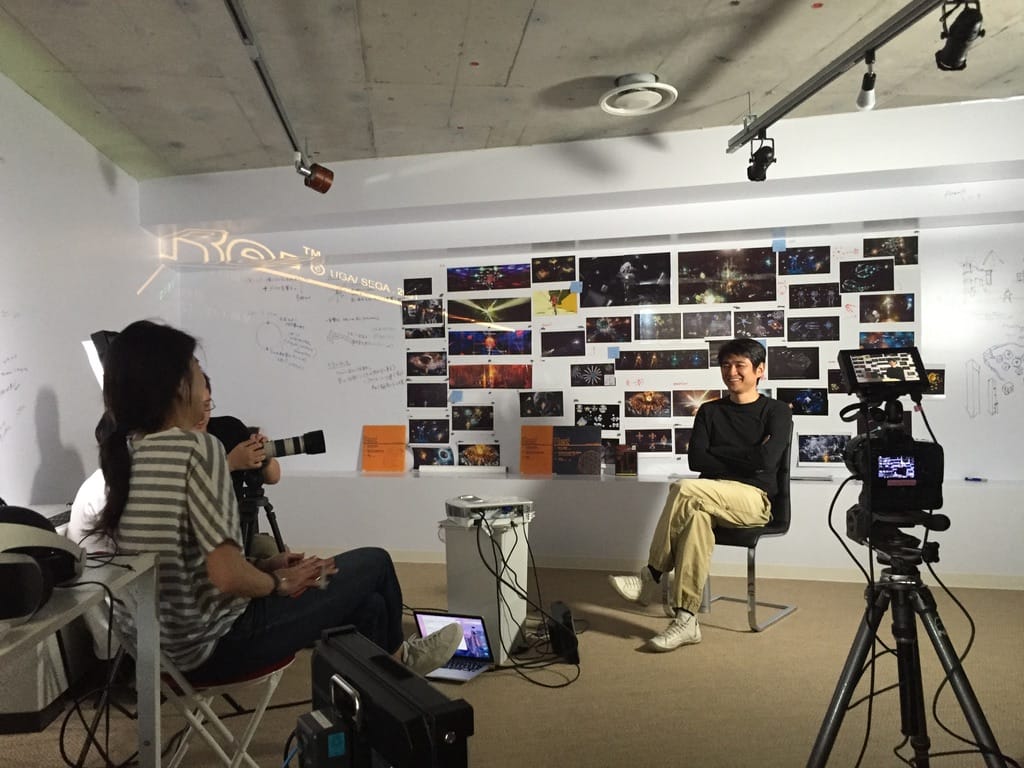
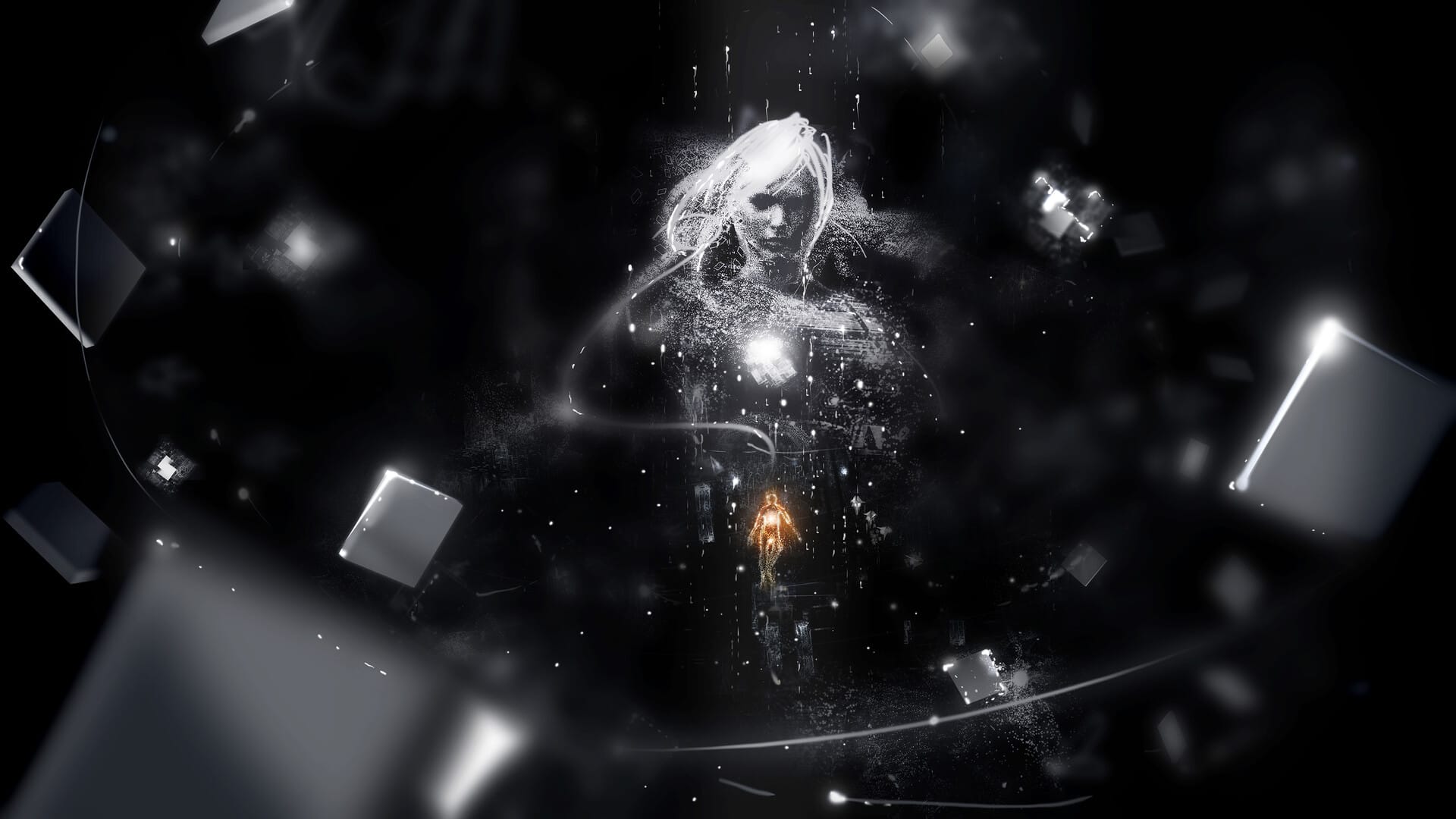
Prior to signing a deal with Sony, Enhance planned to run a Kickstarter campaign to fund Rez Infinite -- and even shot a pitch video for it. | Images: Takashi Ishihara/Enhance
[For a period of time, the team settled on taking that idea to Kickstarter, with a base campaign to re-release the original game on PC and stretch goals to add things like a virtual reality mode. Mizuguchi was considering a new version of the Trance Vibrator peripheral released alongside the original Rez as a backer reward, and filmed a pitch video with the documentary team 2 Player Productions.]
Mark MacDonald (producer): That was 100% the plan. So actually, Mizuguchi-san came to us at 8-4 […] before we had done the Mighty No. 9 campaign. And we hit upon the idea of, OK, if you did a PC version of Rez, it would be "timeless," because PC games just work, right? New systems come out. New hardware comes out. But it's just eternal. So that would be the way that we would unlock it and have it live on forever and not just run into this problem again, a couple years down the line. And so Kickstarters were becoming big, and we said, "Hey, we have this Mighty No. 9 campaign we're actually about to run. Let us run that and kind of see and learn what we're doing by it, and get a bunch of learnings and experience from that, and then I think we could apply it to Rez."
And so we did that. The Mighty No. 9 campaign went very, very well. The game, not so much, but we didn't have much influence on that. The Kickstarter campaign was fantastic, though. We learned a ton from it, and so we were having discussions with Mizuguchi-san the whole time, and we hit upon this idea of, Oh, you know what else is happening? VR is happening right now. And so, we were like, Hey, as a stretch goal, what if we made the idea that, hey, this could also be in VR now for the first time? And so that was another step forward. But the idea was absolutely, it would be a Kickstarter, and we did a bunch of things with that thinking in mind.
So we went to a GDC, basically thinking and expecting, OK, this is going to be a Kickstarter. And we needed to get Steam's permission, too — when you announced a Kickstarter, you needed to say, "Hey Steam, this game is coming out on Steam. Is that OK?" At that time, you just couldn't put any game out on Steam.
And we had to go to Sony and be like, "Hey, Sony, we also want to consider doing this for your hardware." Sony was starting to talk about their VR thing. What was it called? Morpheus or something? I forget. There was only a codename. We didn't know when it was coming out, didn't know any of that stuff. And so we had a lunch with them, ostensibly to talk about, "Hey, could we put this out? Are you going to allow us to put this out on PlayStation? Can we get Morpheus dev kits?" Et cetera. And over the course of that lunch, it became clear, like, Hey, actually they might fund it. Instead of us doing a Kickstarter, they just fund games sometimes. And so over the course of that lunch, it became like, "Oh, no, yeah, that's what we're asking for…" So this was a lunch with Shane Bettenhausen, I think was there, and Nick Suttner and Brad Douglas, who ended up being really instrumental in signing all the VR content.
But, yeah, so it was all on going to be a Kickstarter. In fact, Enhance was incorporated as an American company and is still an American company to this day, because at the time, there was no Japanese Kickstarter. You had to make an American corporation in order to run a Kickstarter. And so that was completely, fully the plan.
And another interesting thing is […] There was a PAX panel for Mighty No. 9 — not the first year it was announced; it was the year after it was announced — where we handed out a flyer, and it was a flyer to tease the Bloodstained Kickstarter. [On the back it had] a mockup of a Quartermann article as like "Quarterwomann." But it was like an old EGM rumor column, and it had teaser images for games that ended up actually coming out many, many years later. All of which we knew were possibilities of going to happen on Kickstarter. One of them was for Shenmue 3. One of them was an Area X image from Rez Infinite. And it said "Area X?" And it pretended like they had scanned it from a Japanese magazine. And that was in 2014 [at the] PAX panel.
So anyway, it was only coming back after that GDC that we came back and were like, "Hey, I think we can get a contract with Sony to do this and not have to ask for money and have it be guaranteed that we could definitely do VR." We wouldn't be able to launch immediately on PC, but we could eventually later, and so it kind of flipped the priority of, "OK, let's take the money, make the PlayStation 4 and PlayStation VR version for PSVR launch, and then we can make the PC, eternal version of it that will live on for forever, later as part of that."
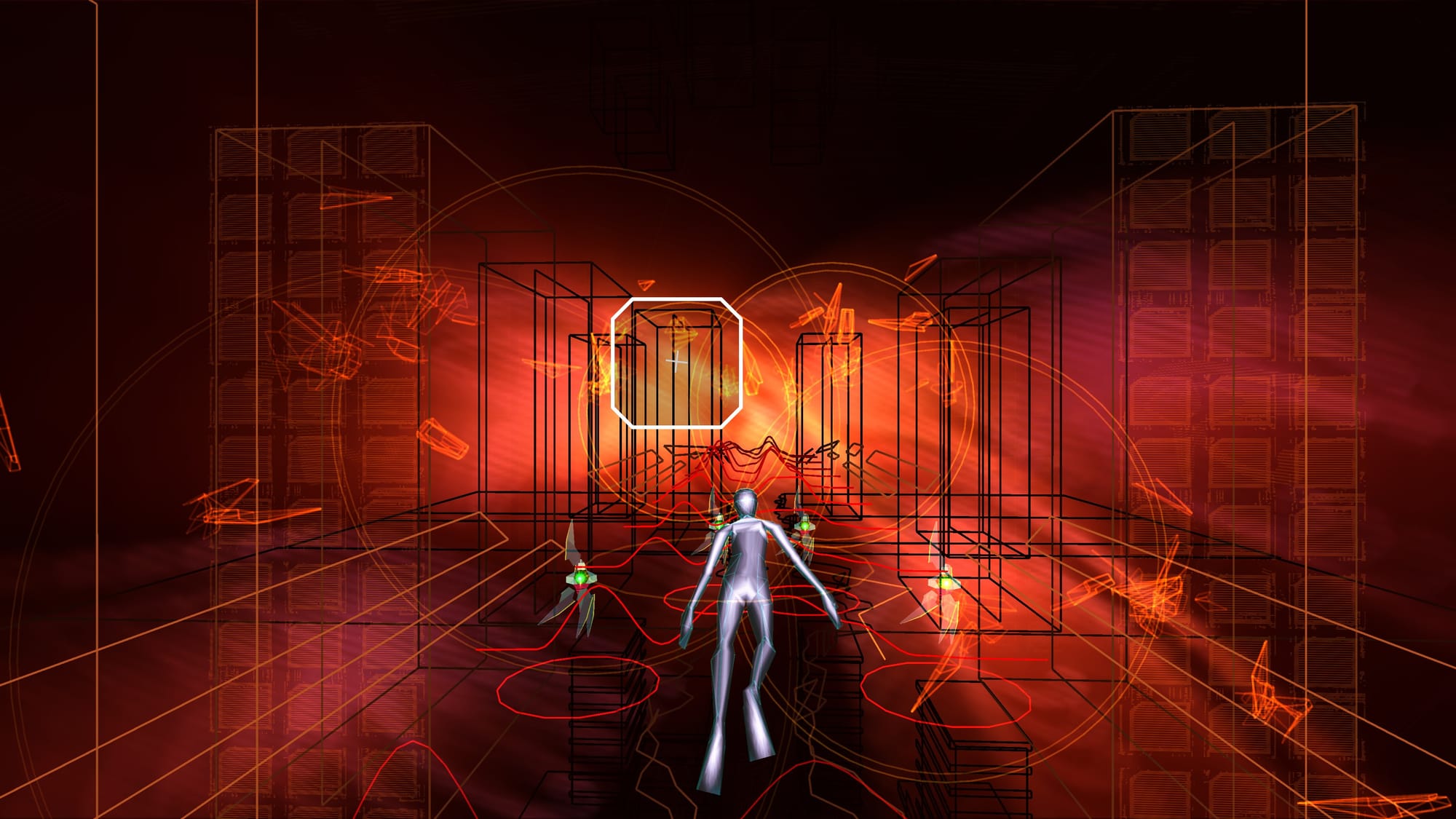
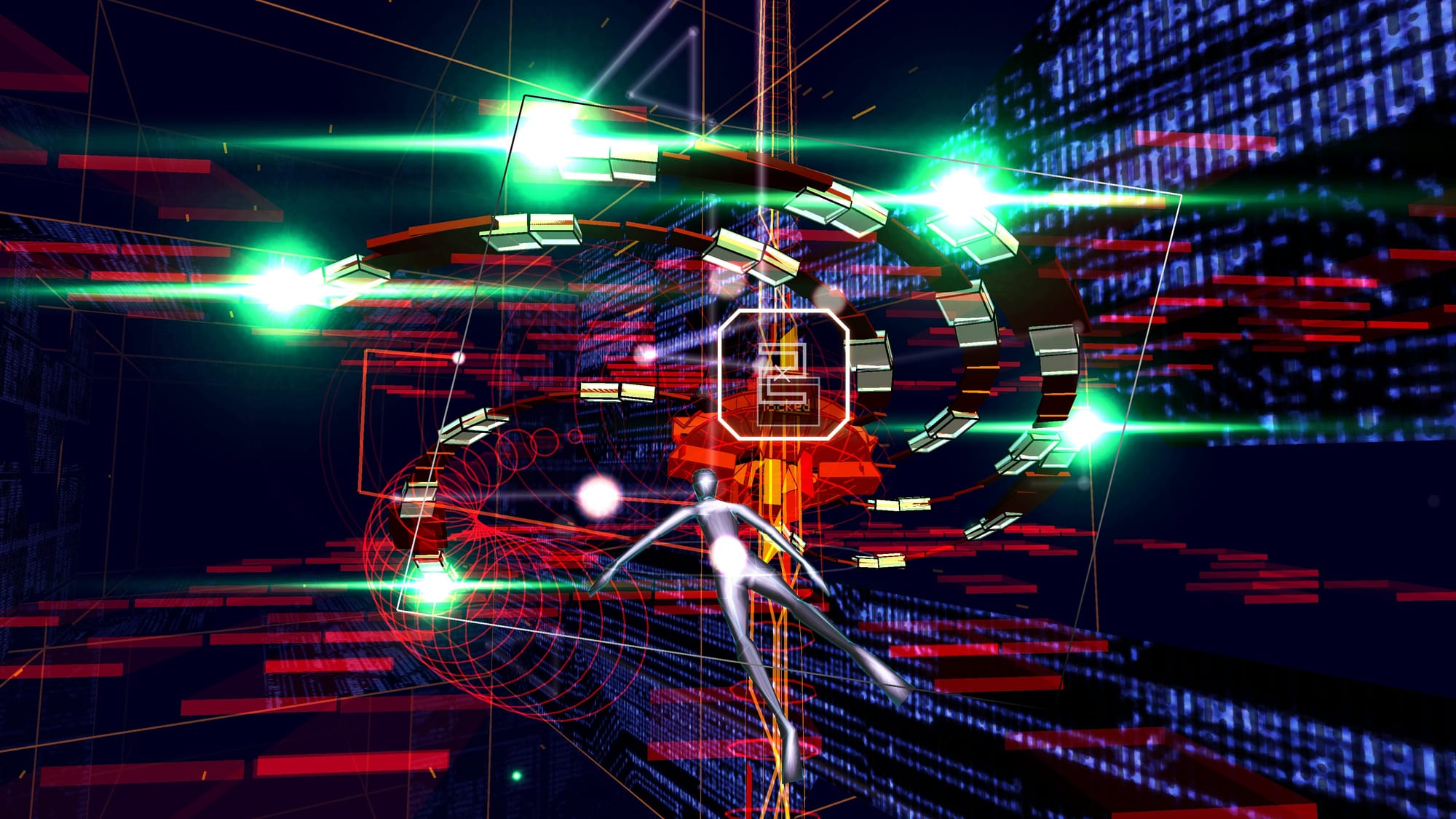
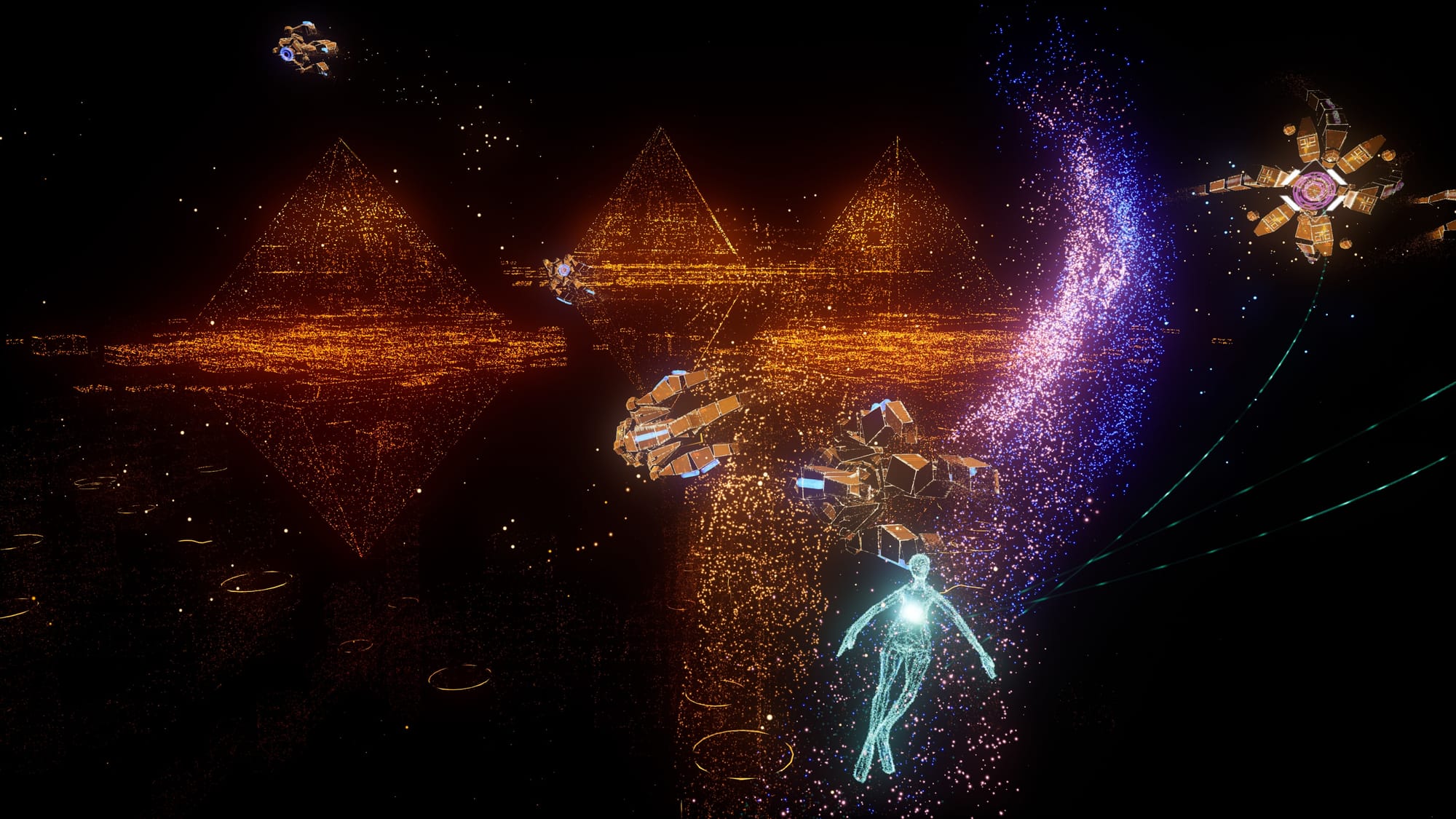
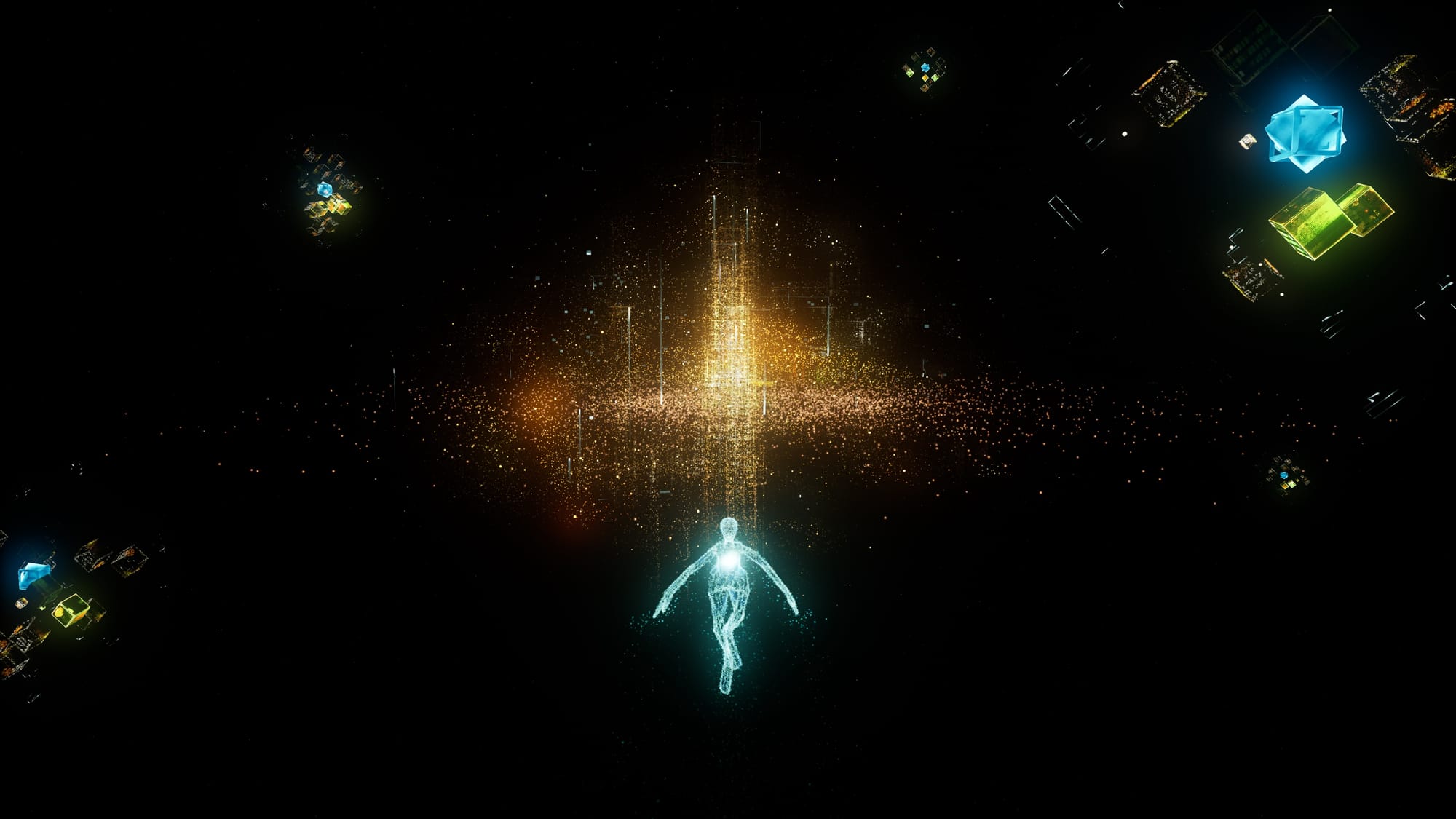
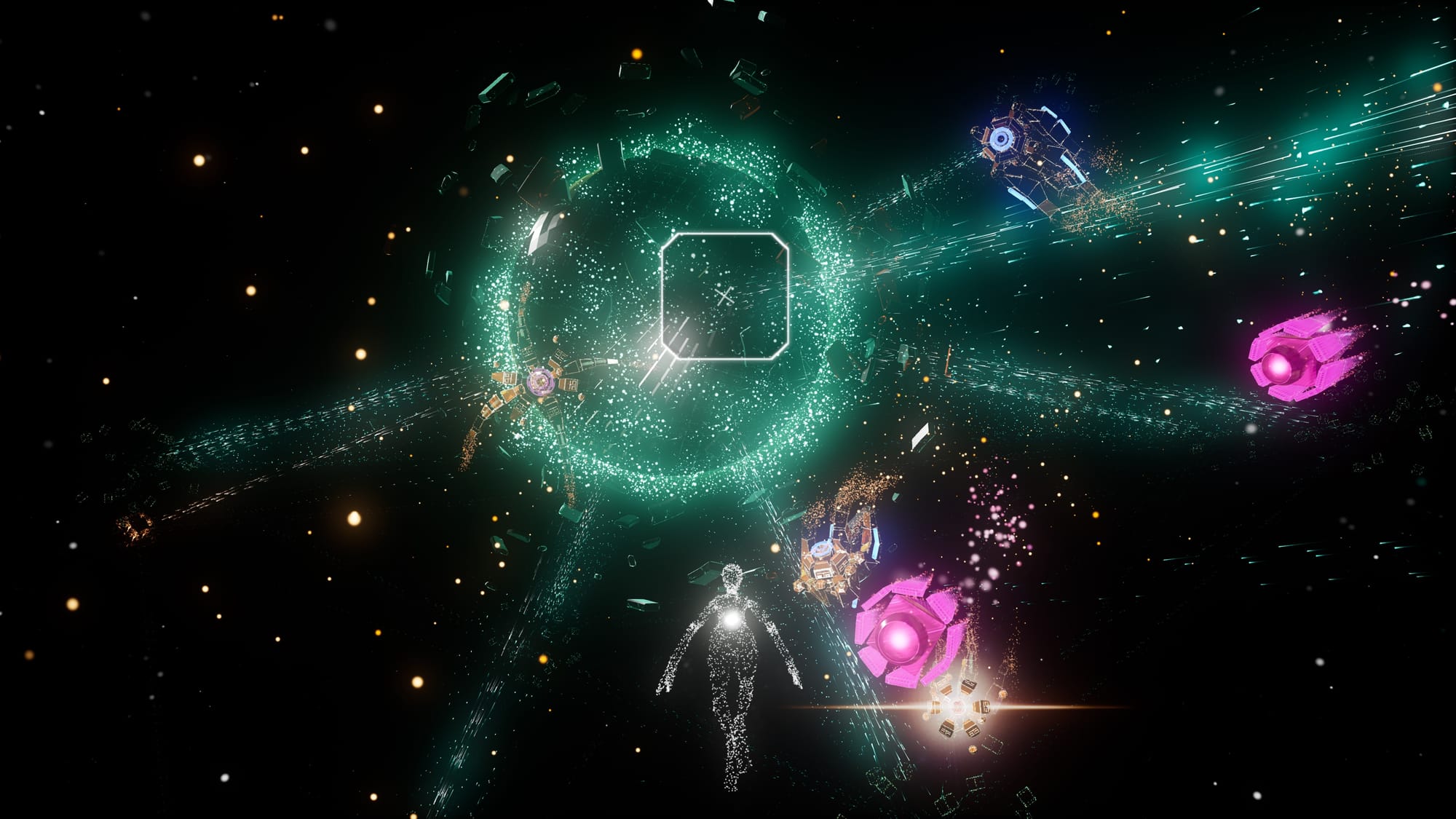
While classic Rez stages (top) look better than ever in Rez Infinite, the game's showcase is the bonus stage Area X (bottom). | Images: Enhance
Building Area X
While reviving Rez was the impetus for kicking off the project, Enhance's deal with Sony not only enabled the team to build Rez in virtual reality, but to build Area X as well. And the latter took some figuring out. The team nailed certain basic concepts early on, like how using particles on a black background helped mask the "screen door" effect present in many VR games at the time. But allowing players to move around freely rather than follow a pre-set path posed some new challenges.
Tetsuya Mizuguchi (creative director): The original Rez was on rails, meaning there's a certain speed and your movement is basically fixed. You can't really change the path. So pretty much from the beginning, I knew that I wanted to break those boundaries. With Area X, the goal was for the player to be able to move freely — to feel the sensation of flying or swimming. But I still wanted to retain some of the core elements that made Rez so unique and so special — so when you aim and shoot, for example, that interaction would still work in a similar manner and style that you know in Rez, with the sound effects still making you feel like you're playing music. That relationship still had to work while the player was free to move around in the world of Area X.
The challenge that I already knew while thinking about that was, How do you keep that excitement, that thrill going and have it sustained to further levels as we build the world? I knew that was the biggest challenge, but at the same time, I was already thinking ahead — that if we could figure that out, then I thought there were two things we could start seeing as big potential possibilities.
One was that Area X would feel really good when playing in VR. I already could see that — if we could figure out how to make this work, I knew it would work really well in VR. Then the second thing was that, when you're on rails, the music is also preset, meaning you have to work with what's in front of you and what's calculated to happen at a specific time. But if we broke that here, then I felt like, OK, we're gonna let ourselves free in terms of even making the music for Area X. And if we could overcome the challenge and solve that […] then from there, moving forward, I saw big potential, big possibilities, even for future games and experiences that we would build. […] That was kind of the core theme and pillar that me and Ishihara-kun were talking about in the early days of trying to come up with this new Area X idea.
Takashi Ishihara (art director): Looking back at these moments that Mizuguchi-san is explaining, I will say that I don't think there was any assurance it would work. We didn't have a super confident, strong feeling that all this talk that we were doing and this concept art that I was coming up with was going to work at that time. It was still a lot of talking, a lot of discussions, mainly because there were rumors of these VR devices coming to the market, but we didn't have them in hand. There was nothing for us to work with in real life. So we had to really use our imagination to its fullest — to the point that we had to talk in a way like, "Just imagine you're fully, fully immersed in this world that's made up of particles — what does that feel like?" We were getting excited while having these conversations, but at the same time, there was nothing to prove that it would work. There was no proof of concept that we could apply to a VR device and say, "OK, we're going in the right direction or we need to course correct." So we were doing that without anything to actually test it out with.
And so, to fast forward a little bit — the very first time I felt like, Oh, all the work that we've done [is paying off] was when we were able to play it in PSVR for the first time. That was the moment that I felt like, Wow, this is gonna work, and we're on the right path.
But I think how we got there — it wasn't easy, but what led us there was probably that myself and Mizuguchi-san had previously worked on games that were not just games-as-products kinds of games. We were building games and viewing these as experiences […] that you feel with your body and really use your imagination and dive deeper into places that you don't see in other games. So I think the quality and the level of conversation we were having was already kind of rich in that sense. […] I feel like the starting point for us was already sort of in the future, so to speak. So therefore, when we dropped in that build for the first time in PSVR, and realized that we were on the right path, that really gave me a sense of confidence, almost a guaranteed assurance that this was going to work.
[While Area X wowed players, its 20-minute runtime meant the team didn't have to deal with some of the issues that could come into play when turning the free-roaming concept into a full-length game. Asked about the difficulty, Mizuguchi says Area X's limited challenge was a design choice.]
Tetsuya Mizuguchi (creative director): Since we were a PSVR launch title, we had to assume pretty much everyone was going to be playing this game on this device that was launching at the same time, and that they would have almost no experience playing games in VR. So we had to really be mindful that the audience base was going to be first-time VR users and players, and that we wanted to, obviously, as a game and this experience, succeed at being an amazing VR title that worked really well using the technology that was available. So in that sense, yes, I don't think we had to prioritize how challenging and tough and difficult we could make this game. It was less about that, and for us, because of our goal of creating experiences that are synesthesia-driven and synesthesia-focused, more about that sort of crossover of How can we make a synesthesia-driven experience in VR and give that sensation and kind of dig deeper into an emotional experience?
Mark MacDonald (producer): I did some user testing before Rez Infinite released, and I do remember us talking about Area X and it being "easy." People weren't failing at it very often at all. And we had people who were 60 and 70 years-old coming in and playing it. We had little kids playing it. And we were actually really, really happy and proud that they were all able to — most of them — clear it. If anybody had any trouble or it just took longer, it was usually at this final boss area, or maybe one other area. But that was something that we talked about, and the team was very firmly, like, "The point of it is different from Rez, where you're meant to play it over and over and over and over and over and master it and master it. The point of it is to play it over and over and over, but it [is also to] have this experience and kind of be wowed by it." And not feel like you're not interacting with things, having some hazards and enemies and things like that, but that it was not a usual game skill curve mastery type thing. It was more, Have this experience, try these little vignettes — and that's what Area X is; it's like a series of kind of experiments in free-roaming gameplay. Like, What if the player activates things like this, or What if the [level is more about the environment] and you're taking on enemies like this? What would a boss be like in this kind of thing? What would a miniboss be like? What's a puzzle like in this world?
Tetsuya Mizuguchi (creative director): It's relatively easy to make a game more difficult. But it's not as easy to design a game where it's not as difficult, but it's in that zone where it's accessible and you want to keep playing and still feel like you have the sense of accomplishing something and progressing in the game.
Mark MacDonald (producer): It's a series of experiments. […] And the feeling was, coming out of it, like, OK, we learned a ton. And even as these early experiments, there was something to it. We learned a lot about exploration in VR, but also using particles and the next versions of synesthesia, and it had benefits onto Tetris Effect and other games. But absolutely, there is still talk about, OK, so what is now the manifestation? What are we gonna do with all of those learnings? And there is a big picture, big idea of what to do with that. That is still something that's in the plans.
About those plans…
During our interview, it's not hard to lead Mizuguchi towards talking about Area X still being a prologue — in fact, he mentions it himself before I have a chance to. He likes positioning Enhance as a company looking towards the future, a theme that's evident not only in Enhance's games, but its other R&D projects like the Synesthesia X1 chair that's designed to make users feel like they're "enveloped in a world of sounds, lights, and vibrations," according to its website.
But is it that simple? Does he just like leaving bread crumbs for fans, or is there a deeper reason behind the long wait for, as MacDonald calls it, "the project that Area X will hopefully have been a prologue to?"
Tetsuya Mizuguchi (creative director): If we're using the word "prologue," obviously something has to come after, otherwise people are going to be wondering when there is the actual, "Ta-dah, this is what we meant by Area X being a prologue to this." The truth is, we haven't said anything about it, we haven't announced it, we haven't revealed it. So nothing that we have put out in the public is the continuation yet to Area X/the "prologue" that I've been calling it so far. But it is something that is constantly in our minds, and we think about it all the time. So, yes, we haven't revealed, said, or given out any secrets as to what that is, but one day we hope we will be able to have that moment to share, with anyone who's interested in it.
[Asked if Enhance staff are currently working on the project, Mizuguchi says yes, but only him and Ishihara.]
Tetsuya Mizuguchi (creative director): To add to the curiosity you probably have about when and why is it taking so long, we're not just sitting on it intentionally, letting time pass by. What we have as this vision for what's next in our heads is something that we just can't realize right now, right away. The root cause and the reason for that is, we're waiting for the right technology that we feel is going to be suitable and that we can take advantage of and use it to its fullest maximum potential, to meet what we have in mind. So we're waiting for that right technology to come and for us to be able to experiment and get it to a point where we feel like, OK, we can express what the synesthesia experience is to us, by using this technology. We are waiting for that to meet us with the idea that we have in our minds. […]
We want to see what's coming next in terms of platforms that we'll be working on, and also just GPU power — how far are we going to be able to take it with the next generation of platforms. I think the current gen, the existing platforms and/or devices that kind of surround us, is not quite at the level that we think will help us achieve the synesthesia-driven experience that we are envisioning. So we're not quite there yet, and that's why we're waiting for more to come in the future.
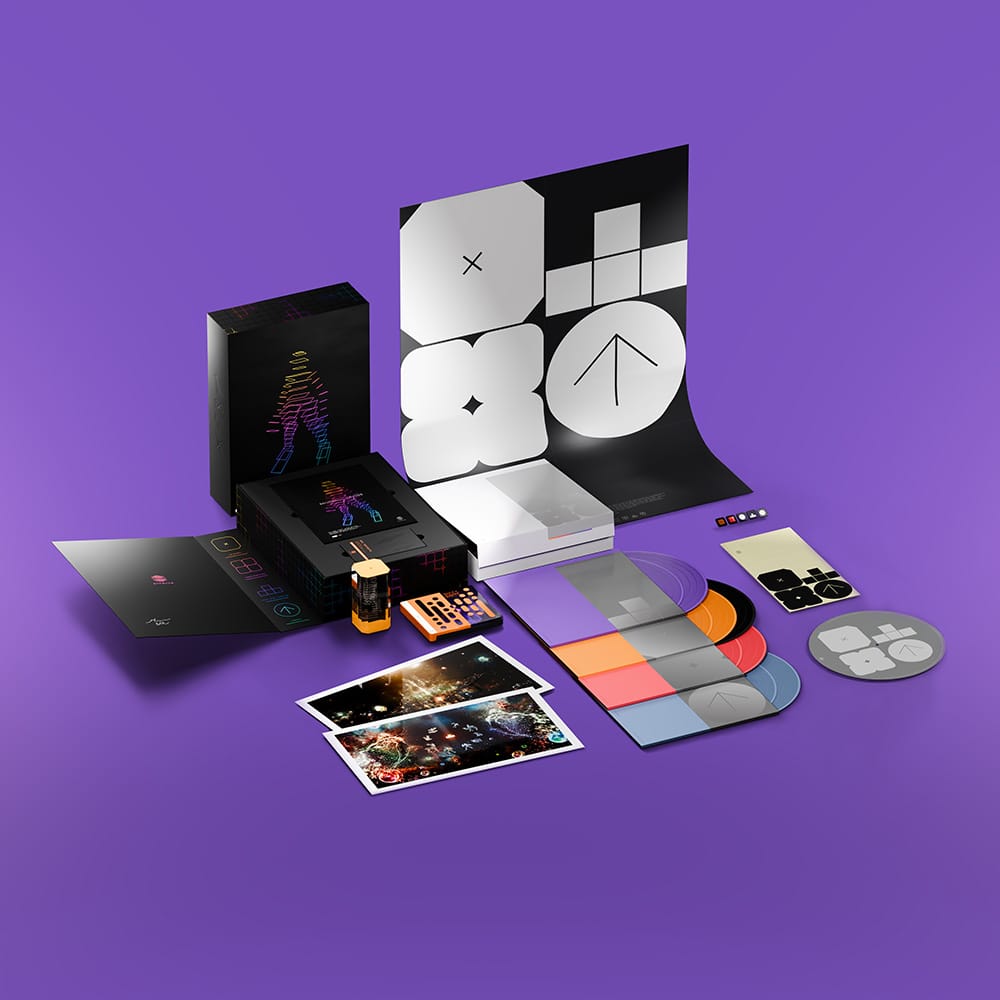
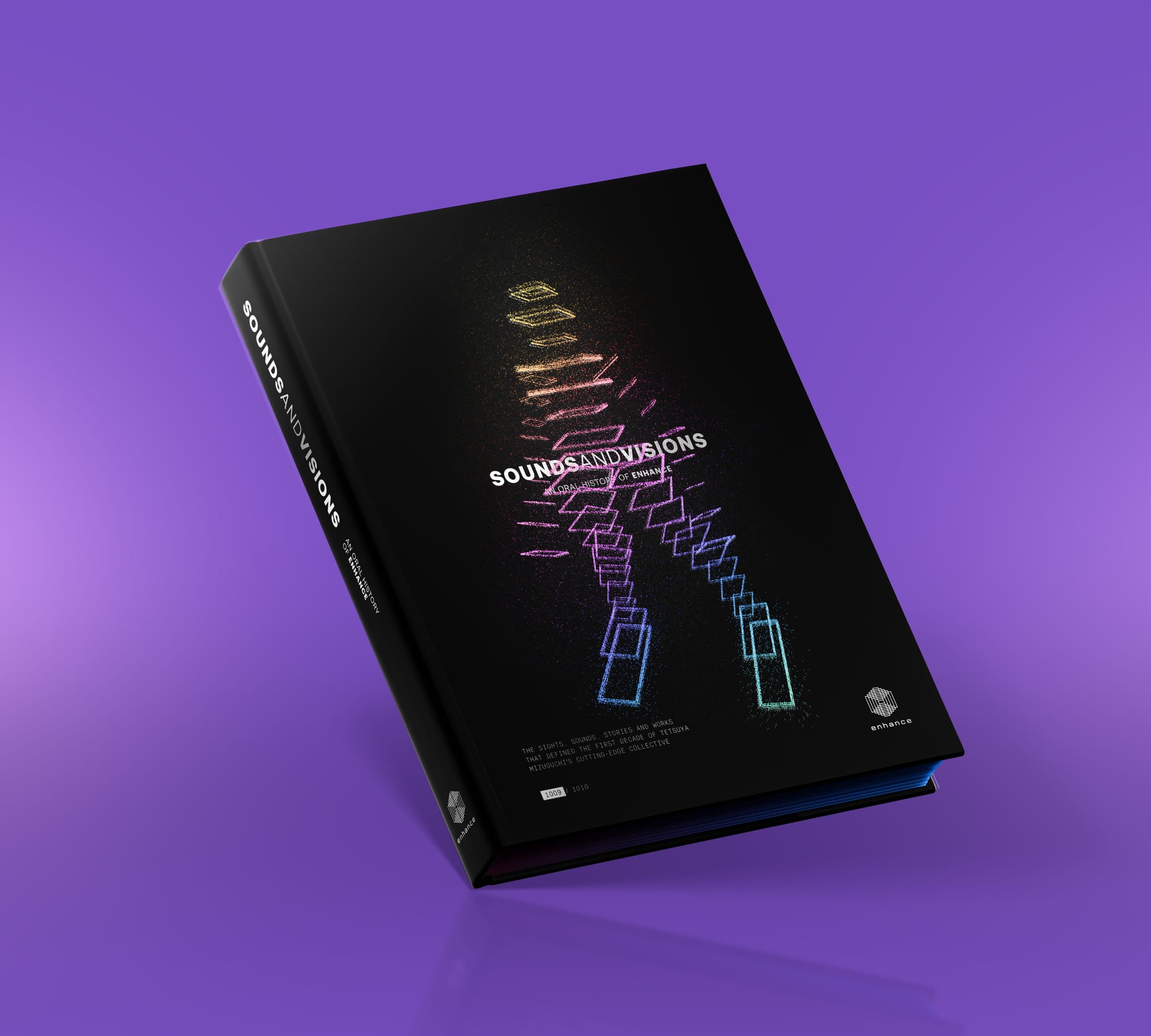
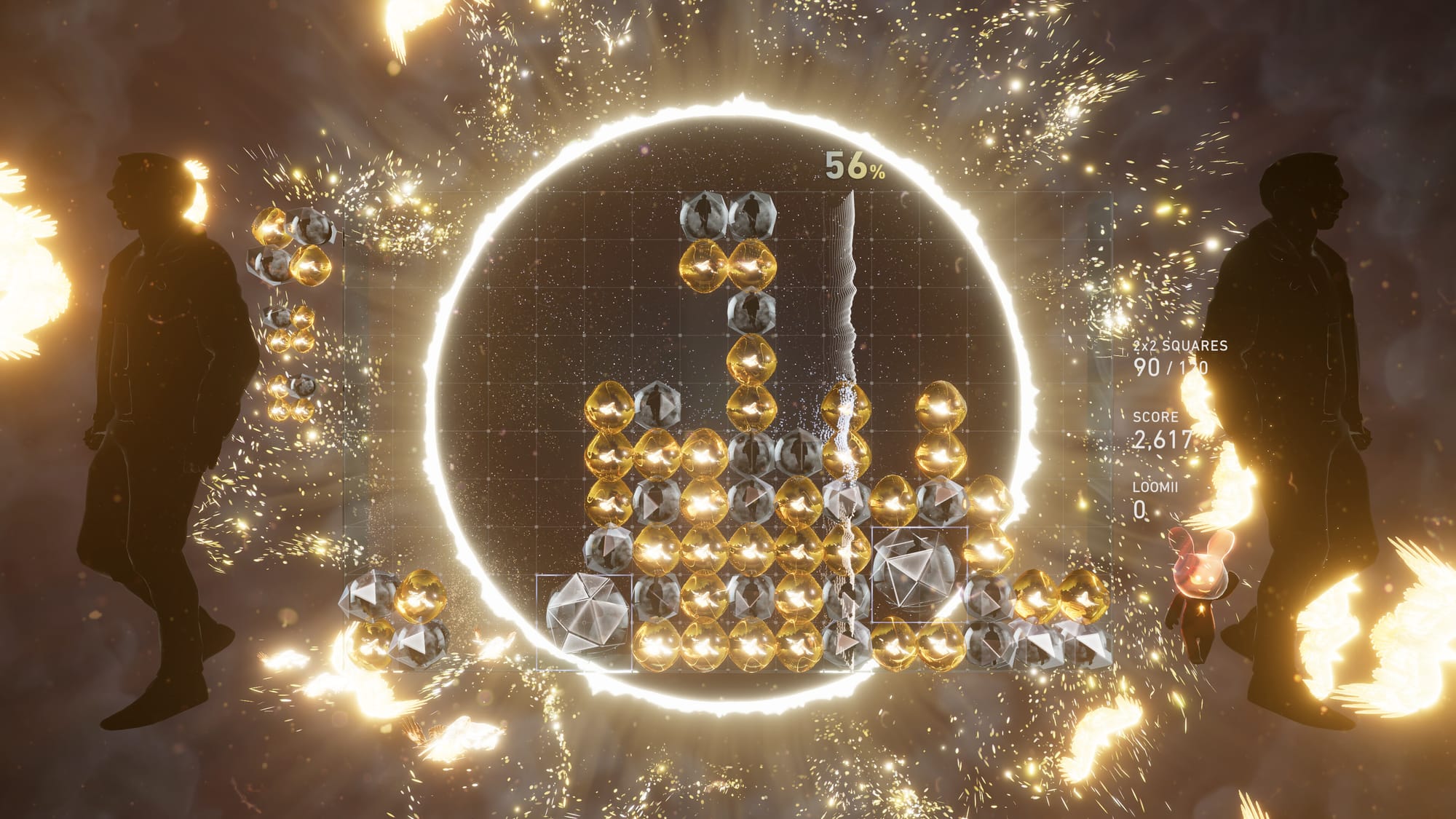
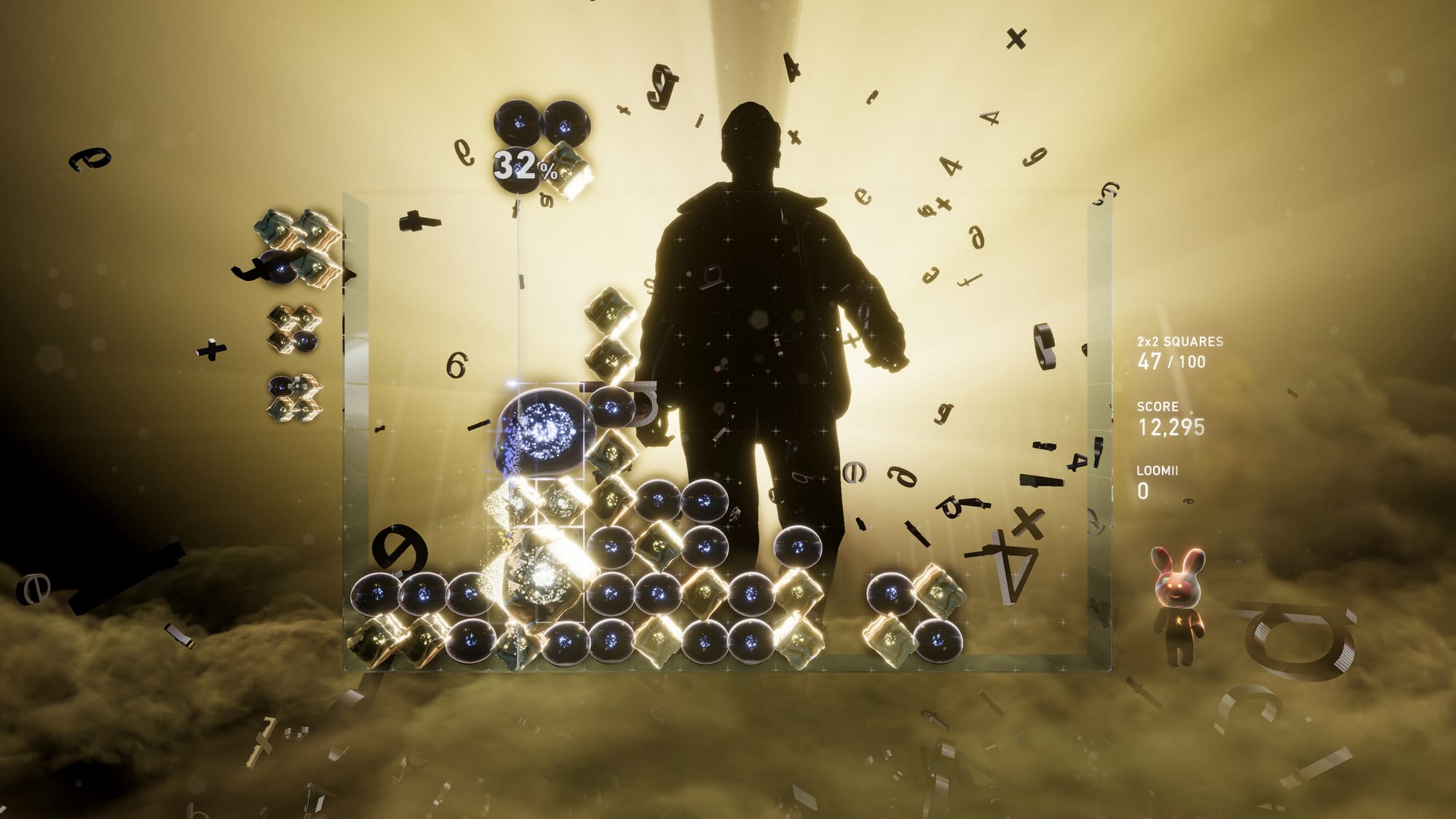
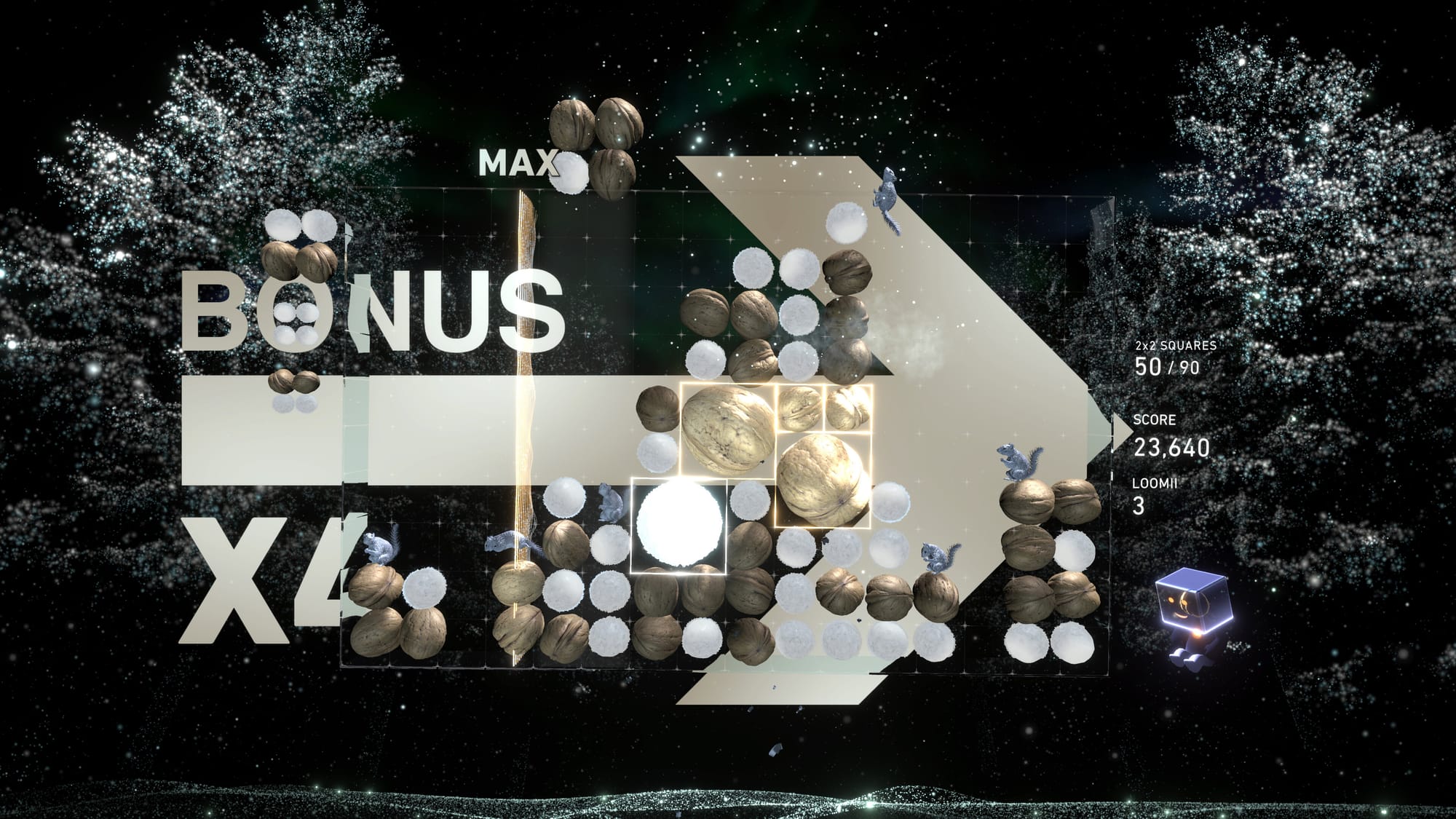
The upcoming book Sound and Visions: An Oral History of Enhance will dive deeper into the making of Rez Infinite, as well as Enhance's other games like Lumines Arise. | Images: Cook and Becker, Enhance
So, we wait
Mizuguchi's answers cleanly thread the needle of offering hope, yet leaving uncertainty of when we'll see anything. Could it be in the next few years, as we start hearing about next-gen consoles? Could it be on a future VR headset? In a 2015 Eurogamer interview, Mizuguchi said he "always felt Rez should be a trilogy" and called it "kind of my life's work" — so maybe it's time to get comfortable.
I think I'm ready to not assume it's next in line, though.
Lumines Arise releases next week, on November 11th. Like Tetris Effect, it takes a well-established puzzle game concept and adds a fireworks show, a subtle story, social and multiplayer features — and from all accounts, it looks like another critical darling.
After that, Enhance isn't saying, at least not directly.
As Mizuguchi tells it, Enhance has been building up its resources over the past decade. When he started the company, he was the only full-time employee and he worked with contractors and external companies to piece together projects like Rez Infinite. Now, Enhance has around 40 employees, with about 30 of those dedicated to internal development and the in-house Synesthesia Lab. The company still works with external teams, such as its "very, very close development partner" Monstars, and now has multiple projects in the works — some of which, MacDonald says, might surprise people.
"We want to be clear that we're not just a block-dropping puzzle game developing company," MacDonald says. Speaking to the studio's upcoming projects, he suggests they may be further removed from Tetris and Lumines than Humanity was.
"Some people could kind of squint and be like, Oh, yeah, Humanity. OK, that seems [like an] Enhance game," MacDonald says. "But there's a couple things we're working on that, I think, when you first see [each], you'll be like, Whoa, that's an Enhance game? And then when you hear more about it and we explain it and you get into it, you're like, Oh, that's why it's an Enhance game."
Whatever shows up next, I'm going to try to stop worrying and just enjoy it as it comes.
[All quotes above from Takashi Ishihara and Tetsuya Mizuguchi were translated from Japanese. Disclosure: I worked with Mark MacDonald at Ziff-Davis Media in the early 2000s.]