
Mirror's Edge: An oral history
17 years on from its release, DICE's first-person parkour thriller remains in a class of its own. We spoke to nine team members about how the game came to be.
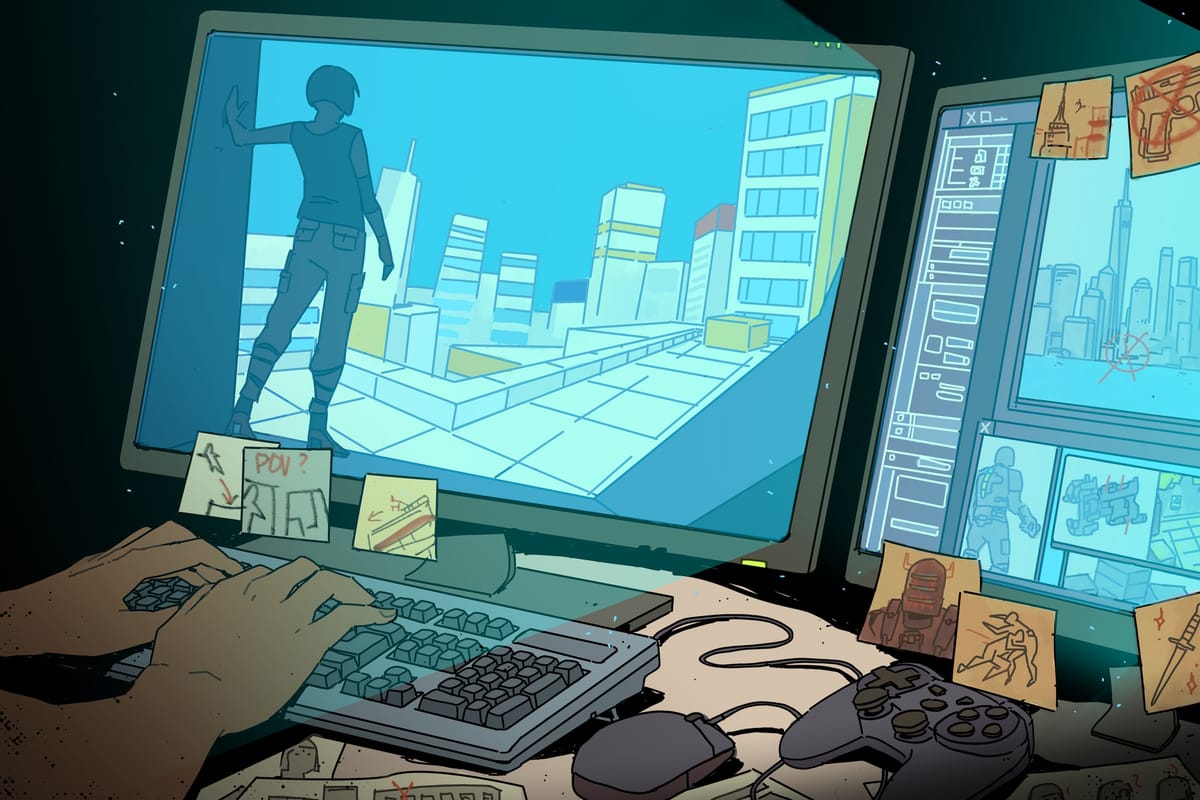
The DICE HQ of the mid-2000s — pristine and glass-covered, overlooking a shimmering, reflective body of water in central Stockholm — looked as if it might exist in Mirror's Edge. In fact, for a few days in 2007, the building's rooftop served as an actual parkour playground for famed freerunner Sébastien Foucan, who leaped about in order to provide the developers below with crucial reference material.
They needed it: Mirror's Edge was a new type of action game — a first-person freerunning adventure starring a Runner called Faith, covertly ferrying information about a shining, seemingly utopian city.
Mirror's Edge was an outlier in every sense: At the time of its release in 2008, the crisp white buildings and cerulean blue skies cut through the morass of queasy-brown blockbuster palettes; in DICE's gameography, it was a brief original-IP interruption amid otherwise clockwork Battlefield releases; for the developers who worked on the game, it offered a fleeting opportunity to flex a different part of their creativity. Johannes Söderqvist, art director of Mirror's Edge, had just wrapped up work on the "bleak, gray, and depressing" Battlefield 2142 when he joined the project. "I wanted to make something that was more fun, a world that was more pleasant to spend a lot of time in," he says.
For Electronic Arts, which acquired DICE in 2006, Mirror's Edge symbolized a brief period when the publishing titan put significant resources behind original titles of committed and experimental game design — games such as Dead Space, Skate, and Left 4 Dead. Even now, there is no mistaking Mirror's Edge for any other game.
It's easy to think that such a one-off experience emanated from the grand vision of a single creator. But according to the nine people who worked on it that we spoke to for this story, that's not the case. Between years of experiments, abandoning dark and gritty concepts, bringing in a star of European art house cinema, finding an art style that worked both aesthetically and navigationally, deciding on a title, and later dabbling in sequel ideas, Mirror's Edge was a concept that evolved slowly over time.
Like Faith scarpering about the rooftops, the team often found itself improvising.
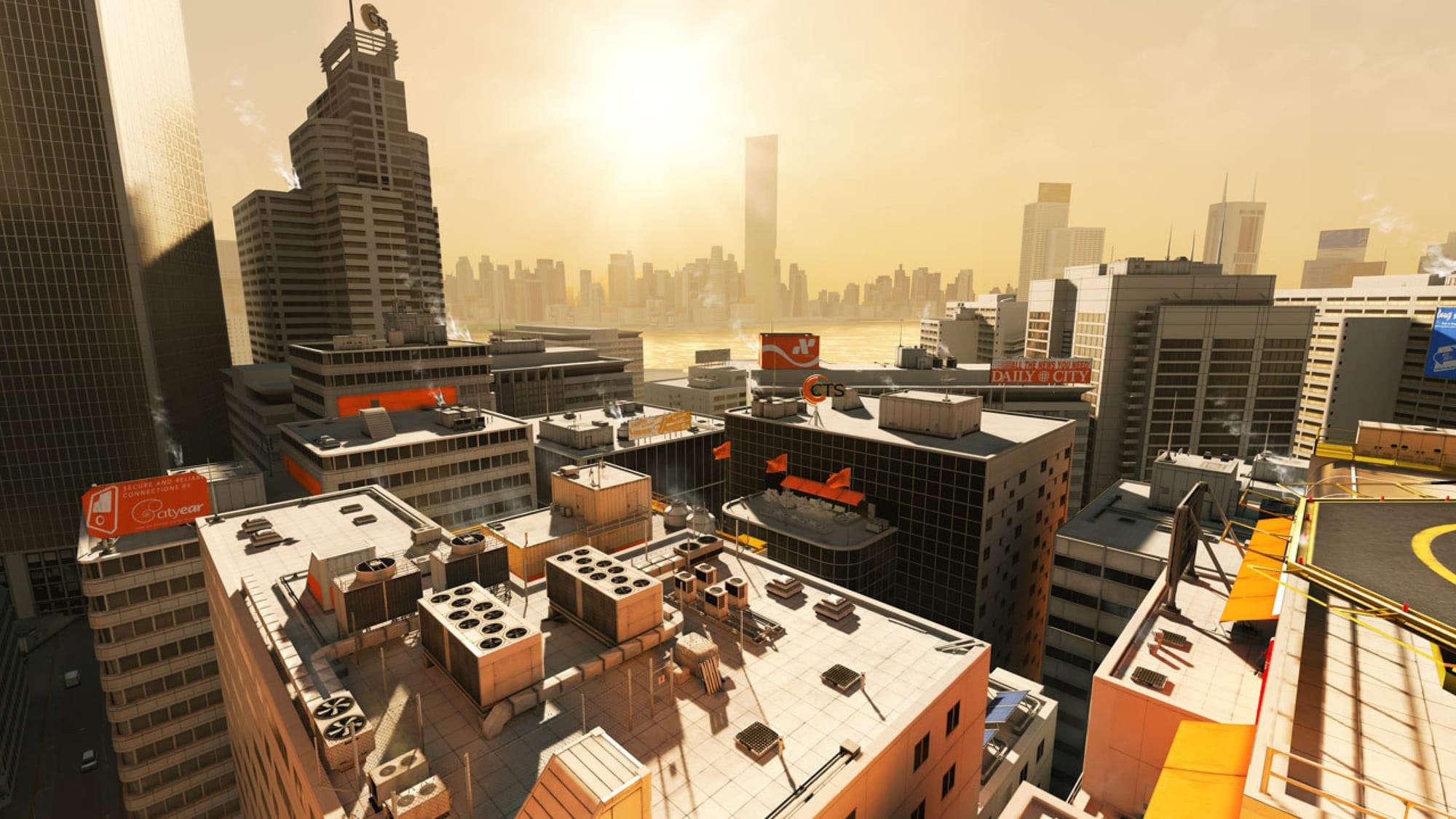
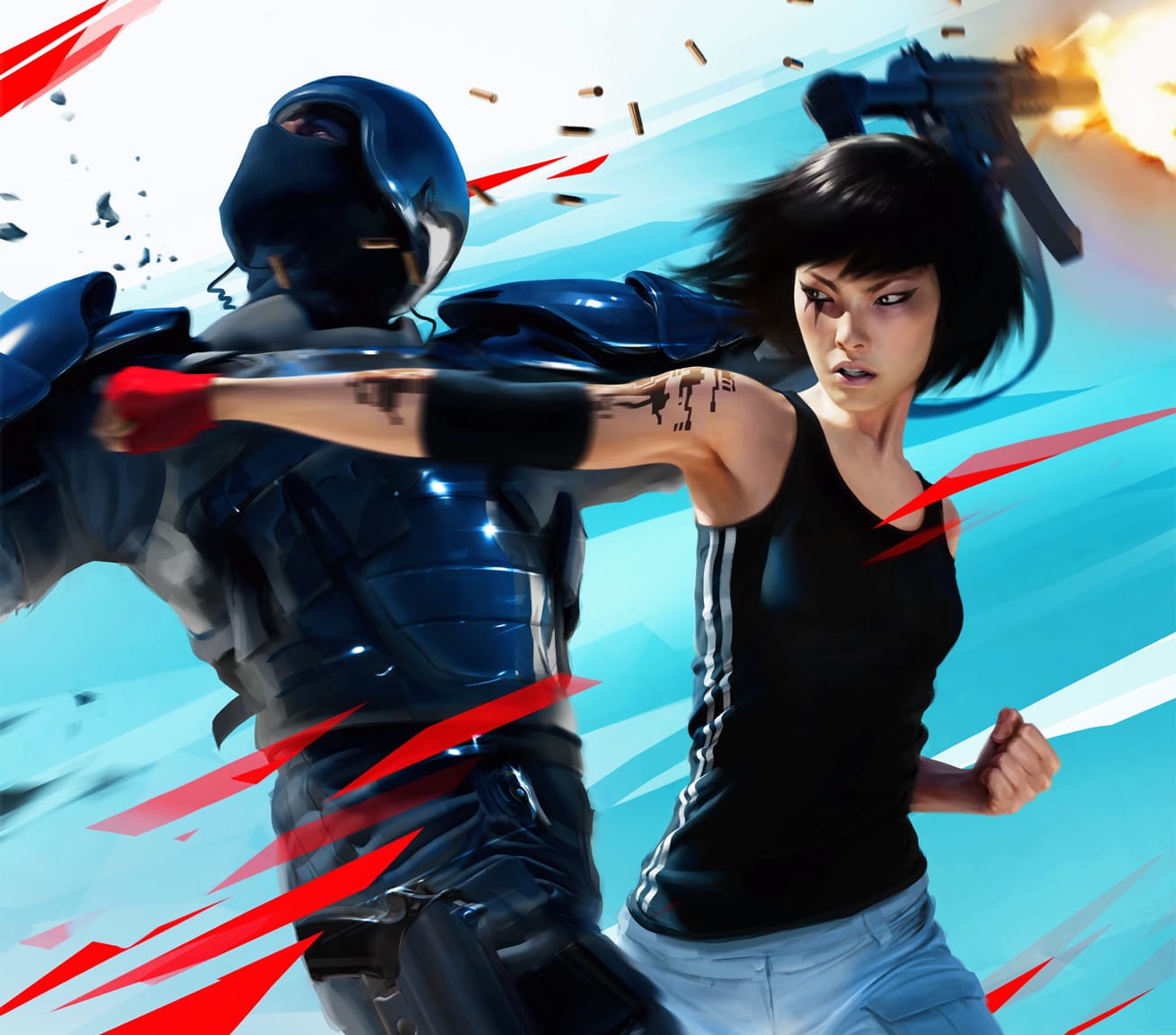
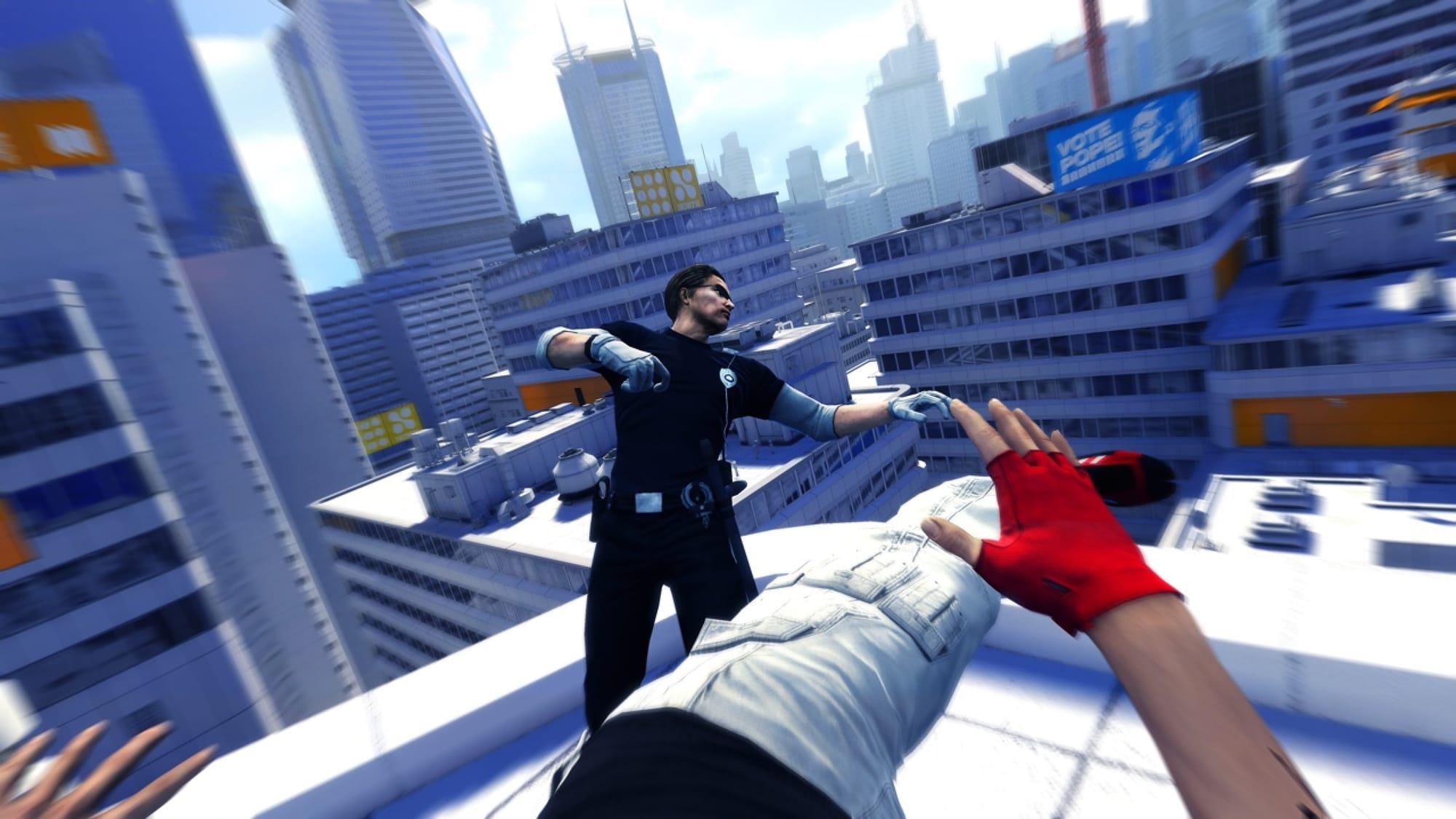
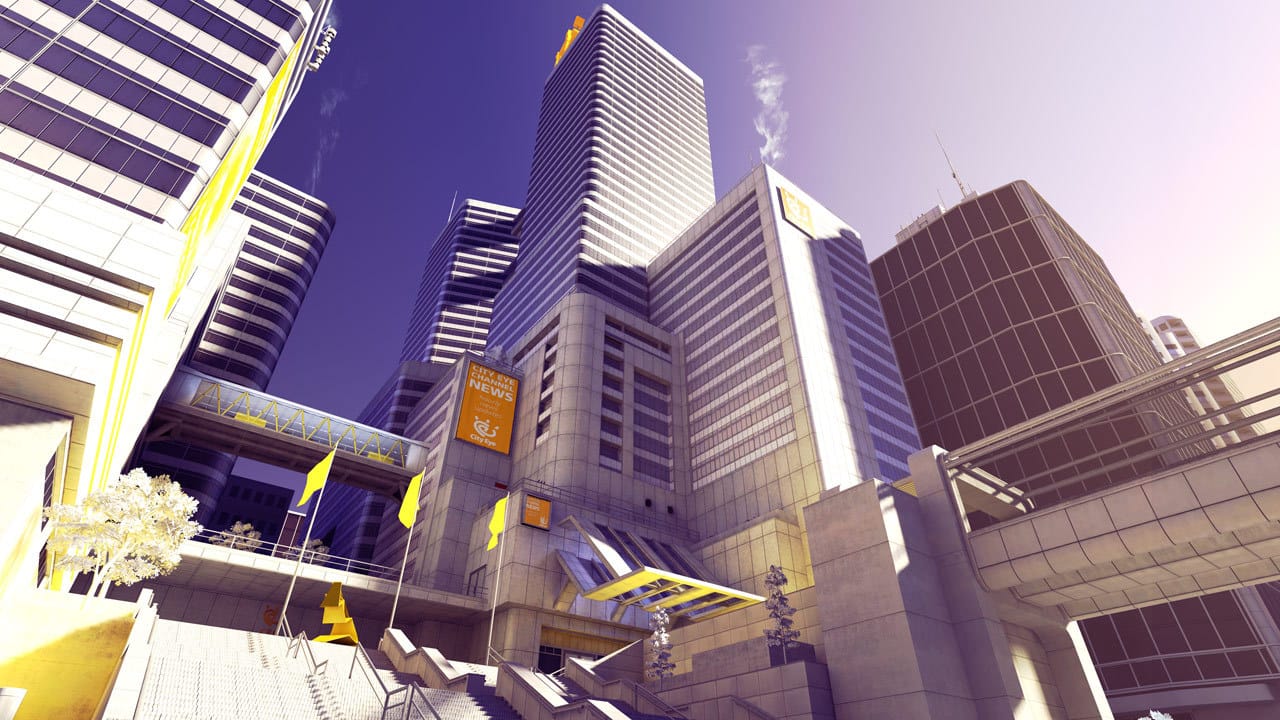
"We tried doing it completely white and cel-shaded, but it didn't work," says senior producer Owen O'Brien. "You needed something between not too busy that it confused your brain, but not so clean that you couldn't judge distances." | Images: Electronic Arts